Advertisement
Space.Fan — Go Beyond
ApJ · 3 HR AGO
UniverseMODEL

Why Some Giant Space Explosions Have a Sneak Preview

By Space.Fan Editorial Desk

Some of the brightest explosions in the universe start with a small, mysterious warning flash that changes everything.
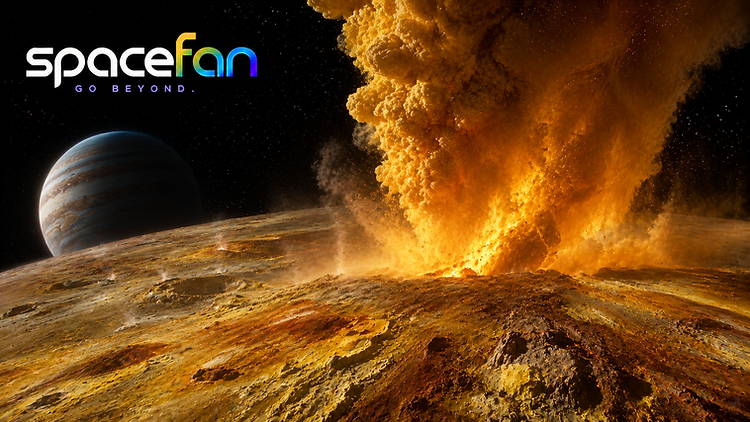
Huge volcanic eruption on the orange surface of Io with Jupiter visible in space behind it.

The Drop

When a massive dies, it creates a Gamma-Ray Burst, one of the biggest explosions in space. Usually, these happen in one quick burst. But about 10 percent of the time, scientists see a small, weak flash right before the main event. This is called a precursor. Scientists wanted to know why this happens and how it changes the light we see later. Researchers looked at how these two explosions interact. Imagine the first small flash acting like a broom. It clears out the space around the before the main explosion hits. This creates a messy, uneven path for the bigger, faster explosion to travel through. Because of this, the main light show gets delayed and changes its shape. To study this, researchers built a computer model that mimics these interactions. They tested their idea using data from past bursts like GRB 220101A and GRB 160625B. The model matched the real light patterns they saw in these events perfectly. This helps prove that the small first flash is actually pushing material around and changing how the main explosion glows for days after.
Advertisement

Why It Matters

Understanding these precursor flashes is like learning to read the fine print of a cosmic event. By knowing how the first flash changes the environment, scientists can get a much better idea of how big and powerful the main explosion truly is. This clears up confusion when the light curves look different than what researchers usually expect. This discovery confirms that Gamma-Ray Bursts do not always happen in a simple, straight-line way. By accounting for the delay caused by the first flash, scientists can more accurately study the physics of high-energy explosions, which are some of the most extreme events in the entire universe.
Advertisement

The Catch

This research is based on a model designed to match specific past events. While it explains the data well, it is still a theory of what is happening far away in deep space. Because these bursts happen suddenly and end quickly, it is very difficult to observe every single step in real time. Future observations will be needed to see if this model holds up for all types of precursor events or if there are other reasons for these light patterns.

Put That in Perspective

Scientists are looking forward to new tools like the SVOM satellite. Because this satellite is designed to look at the sky very quickly after an explosion starts, it will be much easier to catch these precursor flashes and test this new model on brand-new data.

Source September 30, 2026
ApJ

Keep Exploring Space