
Space.com · 7 DAYS AGO
Asteroids & CometsNEW OBSERVATION
A Comet Suddenly Shattered and Became Thousands of Times Brighter
By Space.Fan Editorial Desk
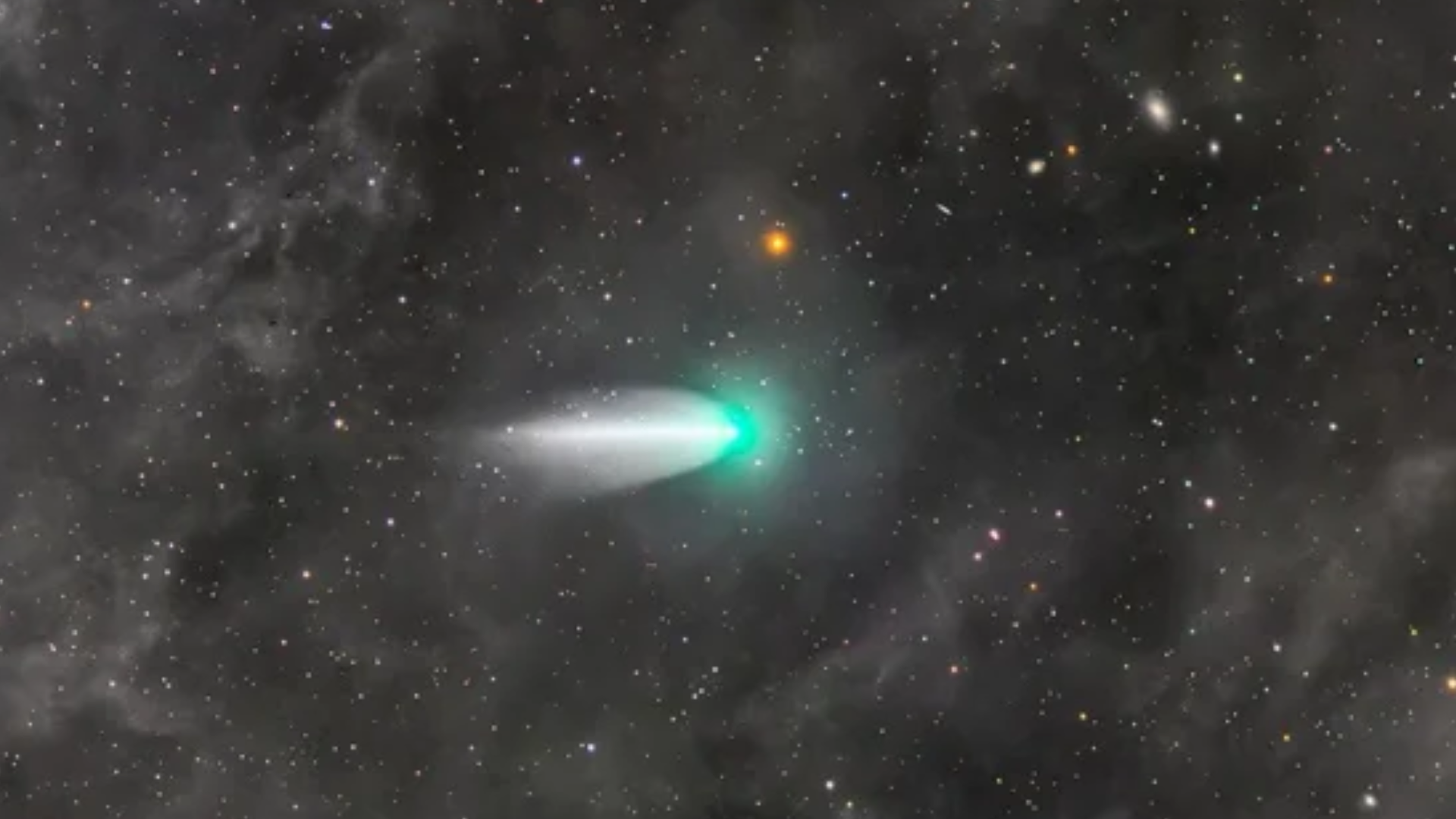
A mysterious space rock named 220P/McNaught blew itself apart this summer, causing a sudden and massive display of light.
The Drop
Earlier this summer, astronomers watched in awe as a known as 220P/McNaught went through a wild transformation. Without warning, the suddenly grew thousands of times brighter than it had been before. This change was so dramatic that it became one of the most exciting events of the year for people who enjoy looking at the night sky through telescopes. Scientists believe the experienced a major outburst that caused it to break apart in space. This violent event happened when trapped gases inside the icy rock suddenly pushed their way out. The pressure was so strong that it caused the to crack and crumble. As the fell to pieces, it threw a huge amount of dust and gas into the air around it, which reflected sunlight and caused the sudden jump in brightness. By studying how the changed over time, researchers were able to confirm that it was not just a small flicker but a massive release of material weighing billions of pounds. The event shows just how fragile these icy travelers can be as they journey through the heat of our solar system.
Advertisement
Why It Matters
Understanding why s blow up helps scientists learn what these ancient objects are made of. Because s are like dirty snowballs left over from the birth of our solar system, they act as time capsules. By watching how 220P/McNaught fell apart, researchers can better understand the structure of the ice and dust held deep inside these objects, which helps them map out how the solar system formed billions of years ago.
Advertisement
The Catch
While we know the broke apart due to gas pressure, it is difficult to know exactly what the inside of the looked like before the event. Scientists rely on light patterns to guess what is happening, but they cannot see inside the core directly. Because the event happened suddenly, there is still some debate about exactly what triggered the initial release of gas at that specific moment.
Put That in Perspective
Comets often change as they get closer to the sun, but such a dramatic brightening is a rare treat. Astronomers have been watching comets for centuries, and comparing 220P/McNaught to past records helps them see if these kinds of explosions are becoming more common or if they are simply part of a typical comet's life cycle.
Source November 15, 2026
Keep Exploring Space


Solar System
Moon Craters Are Shallower in Its Darkest Corners
New high-resolution images show that small craters in the Moon's cold, shadowed regions are shaped differently than those in sunny areas.
PEER REVIEWED2 HR AGO


Solar System
Protecting Worlds: How We Keep Space Clean
As space travel grows, scientists are updating rules to keep our planet safe and protect other worlds from Earth's hitchhiking germs.
AGENCY CONFIRMED2 HR AGO