Advertisement
Space.Fan — Go Beyond
AJ · 46 MIN AGO
DiscoveriesPEER REVIEWED

A Lava Planet Keeps a Surprising Reflective Shield

By Space.Fan Editorial Desk

Astronomers found that a scorched rocky world is wrapped in a glowing, reflective atmosphere that shouldn't be there.
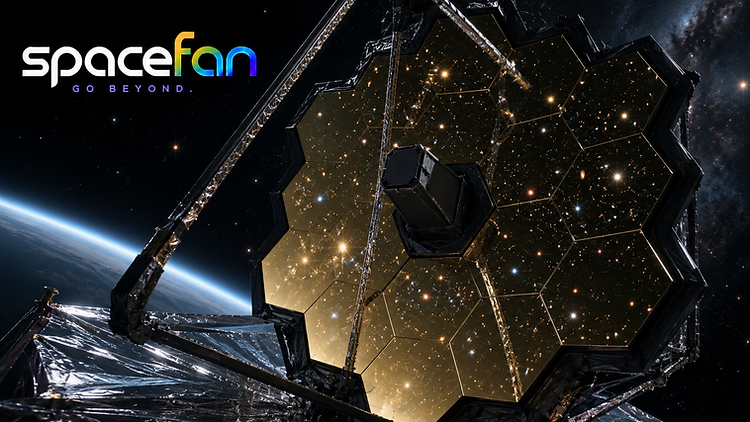
James Webb Space Telescope in space with its gold segmented mirror facing the stars.
Image · Space.Fan

The Drop

TOI-561b is a that circles its very quickly. It is essentially a ball of lava. Because it is so close to its , scientists expected the to be completely bare, with no air at all. Intense heat from the should have blown away any gas long ago. However, new data from the James Webb Space Telescope shows something unexpected. By watching the for 37 hours, researchers caught its full orbit in action. They measured how much light the sends out as it spins. This helped them figure out what might be surrounding the . Instead of a bare rock, the data points to a shiny atmosphere. The is bright, which means it reflects a lot of sunlight back into space. This glow likely comes from clouds made of tiny bits of minerals like quartz and magnesium. These clouds probably form in the cooler parts of the near the edge between its day and night sides. It seems the might be recycling gases from inside its rocky core to keep this atmosphere alive.
Advertisement

Why It Matters

This discovery is a big deal because it challenges what we thought we knew about rocky s close to their s. We used to believe that s this hot were always just dead, airless rocks. Finding that a can hold onto an atmosphere in such a harsh environment suggests that the ground and the air are interacting in ways we are just beginning to understand.
Advertisement

The Catch

While the evidence for a reflective atmosphere is strong, researchers are still using computer models to fill in the gaps. We cannot see the atmosphere directly. The results depend on how accurately we can model the 's own light, which can sometimes look like ary signals. Future observations will be needed to be certain of exactly what those clouds are made of.

Put That in Perspective

In the past, we could only look at these planets during specific moments, like when they passed behind their stars. By tracking the entire orbit, scientists have a much clearer map of the planet's heat and light. This method provides a much better picture than previous, shorter observations.

Source October 4, 2026
AJ

Keep Exploring Space