Advertisement
Space.Fan — Go Beyond
AJ · 48 MIN AGO
DiscoveriesPEER REVIEWED

New AI Tool Speeds Up the Hunt for Dying Stars

By Space.Fan Editorial Desk

Scientists are using artificial intelligence to scan thousands of deep space images for rare planetary nebulae.
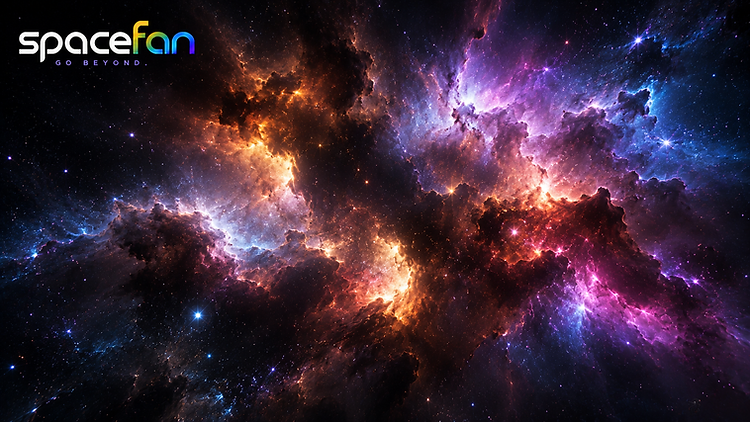
Colorful glowing nebula filled with stars and clouds of blue, purple, orange, and red gas.
Image · Space.Fan

The Drop

When a like our Sun reaches the end of its life, it sheds its outer layers into space. This creates a beautiful, glowing cloud of gas called a ary nebula. These clouds are hard to find because they are often faint and spread out across the dark sky. For a long time, astronomers had to look through massive piles of pictures by hand to find them, which takes an incredibly long time. Now, a team of researchers has trained a computer program to do this work for them. The team used a powerful artificial intelligence system known as YOLO, which is famous for being able to quickly identify objects in photos. They fed the system thousands of images from two large sky surveys, IPHAS and VPHAS+. By teaching the AI what a nebula looks like, the program learned to spot these glowing gas clouds in pictures that humans might have missed. The computer works with high accuracy, finding these cosmic leftovers in seconds rather than days. This new method makes it much easier to map out the different stages of a 's final moments.
Advertisement

Why It Matters

Finding these nebulae is important because they help astronomers learn how s recycle their material back into space. The gas and dust they release eventually become the building blocks for new s and s. By finding more of these objects, scientists can build a clearer picture of how our galaxy has changed over time.
Advertisement

The Catch

While the AI is very good at its job, it sometimes gets confused. In space, there are other types of gas clouds, like H II regions, that can look very similar to ary nebulae even to advanced programs. Distinguishing between these look-alikes remains a challenge that requires further improvements to the software.

Put That in Perspective

In the past, finding new nebulae was a slow and manual process. This new tool represents a big step forward in how we analyze the massive amounts of data collected by modern sky surveys. Researchers now plan to refine the AI to better distinguish between different types of space objects.

Source October 4, 2026
Titouan Sérandour, Anne-Laure Méalier, Bruno Colicchio, Dominique Daniel, Philippe Gilberton, Philippe Oros, Thomas Boch, Djaffar Ould Abdeslam
IRIMAS, Université de Haute-Alsace, Centrale Méditerranée, Institut Fresnel, Astro Images Processing, Université de Strasbourg·The Astronomical Journal·10.3847/1538-3881/aea417

Keep Exploring Space