Advertisement
Space.Fan — Go Beyond
ApJL · 1 DAY AGO
Asteroids & CometsMODEL

A Visitor From Far Away Holds Secrets to Its Birth

By Space.Fan Editorial Desk

Scientists used the James Webb Space Telescope to find that a mysterious object from outside our solar system formed in a very special place.
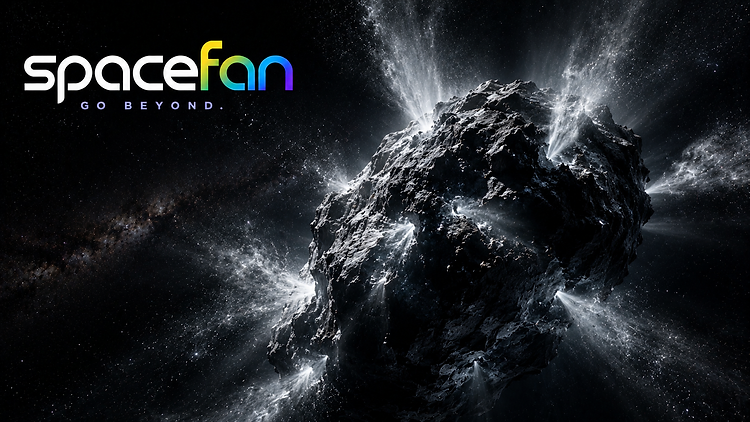
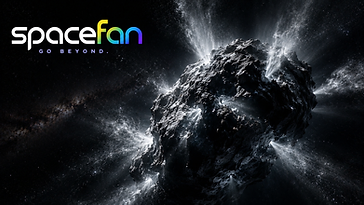
Dark comet nucleus releasing bright jets of gas and dust into surrounding space.
Image · Space.Fan

The Drop

A strange object called 3I/ATLAS recently flew through our solar system from the deep space between s. Astronomers used the powerful James Webb Space Telescope to study the light reflecting off this visitor. They were looking for clues about the chemicals inside it, specifically focusing on water and carbon molecules. When scientists analyzed the data, they discovered something unusual: the object had a very high amount of heavy water, which contains an atom called deuterium. This ratio of heavy water was much higher than what we see in the s that live in our own solar system. This means 3I/ATLAS is very different from the icy bodies we are used to seeing. To understand why, researchers built computer models to simulate how s and s form in clouds of gas and dust. They tested different environments, changing the amount of heat and metals present. By comparing their digital models to the real data from the telescope, they found that 3I/ATLAS likely formed in a place with a lower amount of heavy elements, often called low-metallicity. This discovery acts like a detective clue. Because the chemical makeup of an object is set during its birth in a distant system, finding these specific levels tells us exactly what kind of environment the object came from. It shows that 3I/ATLAS grew up in a part of the galaxy quite different from our own neighborhood.
Advertisement

Why It Matters

Understanding the chemical fingerprint of interstellar objects helps us map the galaxy. By showing that 3I/ATLAS comes from a low-metallicity region, scientists can better understand how varied the conditions are in space where s and s are born. This also confirms that these space visitors can be used as messengers. They travel across the galaxy, bringing physical samples of distant systems to us. Studying them allows us to learn about the chemical makeup of systems we could never visit ourselves.
Advertisement

The Catch

This study is based on computer models, which are simulations designed to match the observations. While the results suggest a low-metallicity origin, the model relies on assumptions about how dense and cold the original cloud was when the object formed. Future observations of other interstellar objects will be needed to see if this pattern of heavy water is common or if this visitor was just a one-of-a-kind oddity.

Put That in Perspective

In the past, we could only study comets and asteroids that were born right here in our solar system. Now, with telescopes like James Webb, we can finally look at objects that have traveled across the galaxy. Researchers expect to keep testing these models against any new interstellar visitors that wander into our view.

Source September 22, 2026
ApJL

Keep Exploring Space