Advertisement
Space.Fan — Go Beyond
arXiv · 7 DAYS AGO
UniverseSIMULATION

AI Helps Scientists Map Millions of Invisible Galaxies

By Space.Fan Editorial Desk

Researchers are using artificial intelligence to build massive, detailed maps of the universe without needing giant supercomputers for every step.
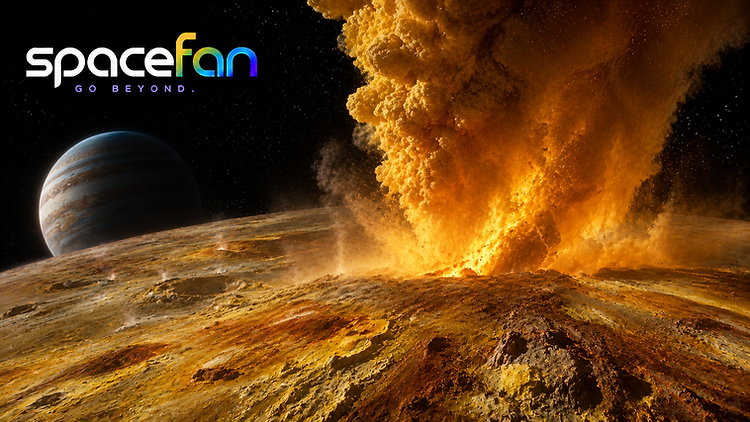
Huge volcanic eruption on the orange surface of Io with Jupiter visible in space behind it.

The Drop

Creating a map of the entire universe is a massive task for any computer. Scientists usually use complex simulations to understand how galaxies grow inside clumps of dark matter. However, making these simulations both large enough to cover huge areas of space and detailed enough to show individual galaxies is incredibly hard and requires way more power than most computers have. To solve this, researchers used a smart new shortcut. They looked at a powerful project called FLAMINGO and trained a type of artificial intelligence to learn the patterns of how galaxies form. Instead of calculating every tiny detail from scratch, the AI learned to predict where galaxies would likely appear based on the invisible dark matter around them. By teaching the computer to recognize these patterns, the team could turn simpler, fast simulations into detailed maps that look just like the complex ones. This allows scientists to study huge chunks of space that were once too difficult to model. The AI successfully created a catalog that matches the results of much slower, more expensive simulations, proving that these digital tools can act as a bridge for future space research.
Advertisement

Why It Matters

This breakthrough changes how we study the structure of the universe by saving vast amounts of computing time. By using AI to fill in the gaps, scientists can quickly test many different theories about how our universe works. It confirms that machine learning can accurately predict complex galaxy arrangements, allowing researchers to study the cosmic web on a much larger scale than previously possible.
Advertisement

The Catch

This method relies on training data from existing, smaller simulations. Because the AI learns from these models, it might only be as accurate as the assumptions built into those original simulations. It is a powerful tool for matching existing data, but scientists must be careful to ensure the AI doesn't accidentally ignore rare or unusual types of galaxies that do not fit the common patterns it was trained on.

Put That in Perspective

In the past, studying large regions of the universe meant settling for low-resolution maps or waiting months for a supercomputer to finish a single run. This new approach acts like a smart magnifying glass, giving us high-detail views of the vast cosmos while keeping the process fast and efficient.

Source November 16, 2026
Elliot Scott, Marika Asgari, Joop Schaye, Matthieu Schaller, Markus Michael Rau
·10.48550/arXiv.2611.17425

Keep Exploring Space