Advertisement
Space.Fan — Go Beyond
AJ · 15 MIN AGO
DiscoveriesPEER REVIEWED

AI Helps Scientists Spot Hidden Planets by Their Timing

By Space.Fan Editorial Desk

Researchers are using a new artificial intelligence tool to detect invisible companion planets by watching how they pull on their neighbors.
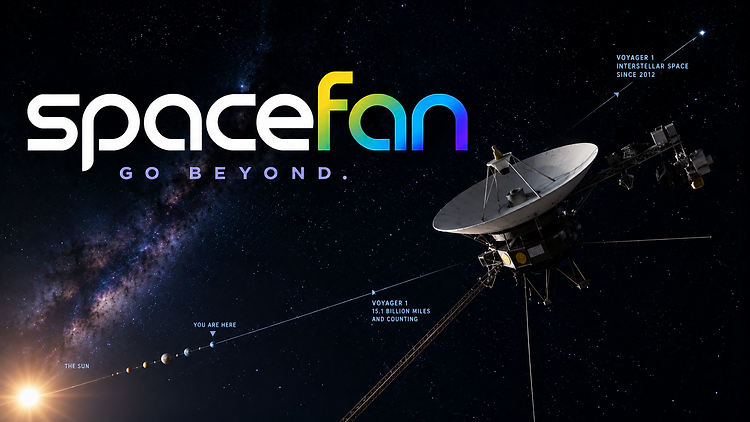
The Voyager 1 probe traveling through deep space.
Image · Space.Fan

The Drop

When we hunt for exos, we often look for the way a blocks a 's light as it passes in front of it. Sometimes, scientists see a arriving a little bit early or late. This is called transit timing variation, or TTV. These small timing changes happen because another is pulling on the first one with its gravity. Usually, math experts use a slow, complex calculation to figure out if a hidden is causing this pull. Now, researchers have built a smart computer program that can do this work much faster using a type of artificial intelligence called a Transformer. This is the same kind of tech that powers modern language tools, but instead of words, it reads patterns in how s move. By training the computer on one million simulated solar systems, the team taught it to guess the mass and shape of a hidden 's orbit just by looking at the timing of the one we can see. They tested their tool on the Kepler-88 system, a place where a hidden world was already known to be playing tug-of-war with its neighbor. The AI successfully identified the properties of that hidden world with great accuracy, showing it could be a powerful new tool for space exploration.
Advertisement

Why It Matters

This technology is a big deal because it could help us find s that are too small or too dark to be seen directly. Many ary systems have hidden members that do not pass in front of their s, making them nearly invisible to our current telescopes. By using AI to quickly analyze these timing patterns, astronomers can find these ghost s without spending months on complex calculations, helping us map out whole solar systems much faster than before.
Advertisement

The Catch

This computer model is not perfect yet. It works best when we already know a lot about the and the we can see. If the system is very different from the ones used in the million simulations, the AI might make mistakes. Future studies will need to test if the tool can handle more complicated systems, such as those with three or more s or s that are acting strangely.

Put That in Perspective

In the past, finding these hidden worlds required deep, manual math. This new approach speeds up the process significantly. Future researchers plan to test if this AI can work on systems with weaker timing signals or more complex setups to see how many more hidden worlds might be out there.

Source November 24, 2026
Chen Chen, Jiapeng Gao, Gongjie Li, Lingkai Kong, Molei Tao
Georgia Institute of Technology·The Astronomical Journal·10.3847/1538-3881/aeb93b

Keep Exploring Space