Advertisement
Space.Fan — Go Beyond
ApJ · 3 HR AGO
DiscoveriesNEW OBSERVATION

Astronomers Find Carbon Monoxide and Dust Inside an Exploding Star

By Space.Fan Editorial Desk

A special type of supernova is making its own dust, giving us a rare look at how stars recycle materials back into space.
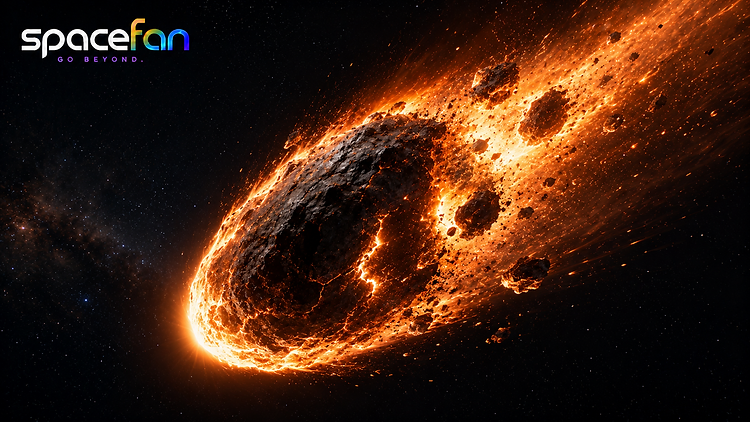
Large fractured asteroid engulfed in flames and glowing debris as it travels through space.
Image · Space.Fan

The Drop

When a massive reaches the end of its life, it explodes in a brilliant event called a . Astronomers recently studied an explosion known as SN 2024rbc. They looked at it using tools that can see both normal light and near-infrared light. About two months after the explosion, they found something surprising: traces of carbon monoxide gas and tiny bits of dust forming inside the leftovers of the . To find these, researchers looked at the way the absorbed and emitted light. Carbon monoxide gas creates a specific pattern in infrared light that acts like a fingerprint. By studying this, the team could identify that the gas was present as the 's debris expanded outward. They also saw a special glow that showed the existence of newly formed dust grains. This discovery is special because it is the first time scientists have clearly spotted carbon monoxide in this specific category of , known as a Type Ib. These s have lost their outer hydrogen layers before they blow up, making them different from other types. Finding these materials tells us that even these stripped-down s can act like factories, building the ingredients needed to form future s and s.
Advertisement

Why It Matters

Space dust is the building block for new s. By finding this dust forming inside a , scientists can better understand where the building materials for the universe come from. It shows that s do not just destroy everything during an explosion; they also leave behind fresh material that will drift through space for eons.
Advertisement

The Catch

While the data is strong, scientists need to look at this explosion using mid-infrared light to be 100 percent sure about how much dust is actually there. Because they only used near-infrared tools, their current estimate for the amount of dust is a best guess. Future observations are needed to confirm the exact weight and size of the dust clouds.

Put That in Perspective

Scientists have seen dust in other types of supernovae before, but seeing it in a Type Ib star helps researchers fill in the blanks about how different stars end their lives. The next step is to use more powerful space telescopes to get a clearer picture of these dusty fireworks.

Source September 26, 2026
ApJ

Keep Exploring Space