Advertisement
Space.Fan — Go Beyond
ApJS · 48 MIN AGO
DiscoveriesPEER REVIEWED

Astronomers Find Hidden Traces of Ancient Star Clusters in Our Galaxy

By Space.Fan Editorial Desk

A new method identifies stars that escaped from old clusters, helping scientists map the history of the Milky Way.
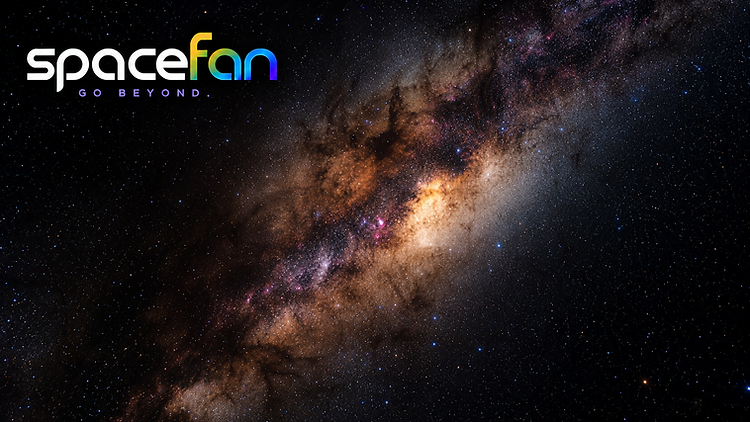
Dense star fields and glowing dust clouds across the center of the Milky Way galaxy.

The Drop

Our galaxy, the Milky Way, is like a giant, messy collection of s. Some of these s live in tight groups called globular clusters, while others wander through space alone. Scientists think that many of these lonely s actually ted inside a cluster but were kicked out long ago. These special s are often rich in nitrogen, a clue that points to their origin in a cluster's dense environment. Finding these s is difficult because they look much like other s, but researchers have now created a new way to pick them out from the crowd. The team used data from two space tools: the GALEX satellite, which looks at ultraviolet light, and the Sloan Digital Sky Survey, which looks at standard colors. Nitrogen affects how a absorbs light in certain bands. By comparing how bright a looks in ultraviolet versus standard light, the team could spot s that had weird, unexpected colors. This pattern revealed which s were likely born inside those ancient, packed clusters. Using this new technique, the researchers sifted through a massive amount of data. They identified nearly 1,000 potential s that are nitrogen-rich. By testing their results, they found that their method is quite good at filtering out regular s to find the hidden ones that came from clusters. This work is a big step forward in building a map of how our galaxy has changed over billions of years.
Advertisement

Why It Matters

Understanding where these s came from is like solving a mystery about the past. By tracking these runaway s, scientists can learn how clusters break apart over time and how they distribute their s into the halo of the Milky Way. This helps us piece together the history of our galaxy's growth and how it assembled itself over billions of years. This method is also very efficient. Because it works well with existing survey data, it allows astronomers to study large parts of the sky at once. This makes it a great tool for future space telescopes that will scan even larger portions of the heavens to find these rare, telltale s.
Advertisement

The Catch

While the new method is promising, it is not perfect. The team found that some s appeared to be nitrogen-rich but were actually just different types of s playing tricks on the measurements. The accuracy of their findings depends on how strict they are with their data cuts. If they are too loose, they get more s but include some mistakes; if they are too strict, they miss some of the real candidates.

Put That in Perspective

In the past, finding these stars was a slow process that required detailed study of each individual star. Now, the team has turned this into a large-scale search. Researchers expect this technique will become a go-to strategy for new sky surveys, including the upcoming Chinese Space Station Telescope, to build a much larger census of our galaxy's population.

Source November 22, 2026
Liangyu Yu, Haibo Yuan, Baitian Tang, Kai Xiao, Xue Lu, José G. Fernández-Trincado
Beijing Normal University, Sun Yat-sen University, University of Chinese Academy of Sciences, Universidad Bernardo O’Higgins·The Astrophysical Journal Supplement Series·10.3847/1538-4365/aeb7e3

Keep Exploring Space