Space.Fan — Go Beyond
NASA · 4 DAYS AGO
DiscoveriesAGENCY CONFIRMED

Astronomers Spot a Rare Cosmic Collision in Andromeda

By Space.Fan Editorial Desk

A star similar to our Sun recently crashed into a larger, puffy star, creating a new and rejuvenated star nicknamed Bao.
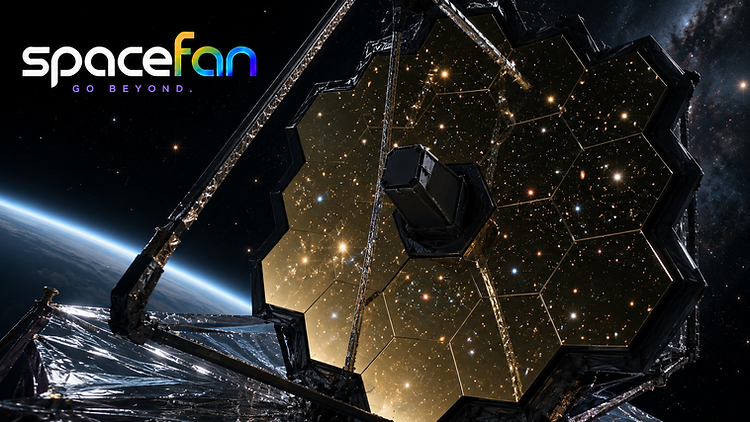
James Webb Space Telescope in space with its gold segmented mirror facing the stars.
Image · Space.Fan

The Drop

Scientists have found evidence of a special kind of merger in the Andromeda galaxy. This happens when two s get too close and crash into one another. In this case, a slightly smaller than our Sun spiraled into a much larger, gas-filled known as a supergiant. This created a new, single object that researchers are calling Bao. The team believes this new might be acting younger than it actually is because of the fresh energy from the merger. To find this rare event, researchers looked at data collected by NASA. They needed to see exactly how the was changing and what it was made of. To get a better look, they used the James Webb Space Telescope. The telescope was able to capture quick, detailed images of the area. This allowed the team to confirm that what they were seeing was truly a stellar merger rather than just a regular, aging . This discovery is a big deal because it is the first time astronomers have clearly identified this specific type of event. While s merge all the time in the vastness of space, catching one in the act or right after it happens is extremely difficult. By studying Bao, experts hope to learn more about how s live and change over time when they run into neighbors.
Advertisement

Why It Matters

This merger is important because it shows us how s can get a second life. When a smaller merges with a giant, it can mix up the gases inside, which might make the look or act like it is much younger than its actual age. This process of rejuvenation changes the life cycle of the and tells us how galaxies grow and evolve over time. By observing this event, scientists can test their theories about how s behave when they are crowded together. It helps explain why we sometimes see s that do not fit the usual patterns we expect based on their age and size. This discovery gives us a new piece of the puzzle for understanding the life and death of s in distant galaxies.
Advertisement

The Catch

While the evidence is strong, this is still a new discovery for scientists. Because the event happened in another galaxy, it is very far away, making it hard to see every tiny detail. There is also still some mystery about how exactly the two s spiraled together before the final impact. Researchers will need to continue watching the to see if its appearance changes as it settles down after the collision.

Put That in Perspective

Astronomers have long suspected that these types of mergers happen, but seeing one is like finding a needle in a haystack. This event in the Andromeda galaxy is one of the clearest examples found to date. Future studies will likely look for similar stars in our own galaxy to see if they share the same traits as Bao.

Source November 18, 2026
NASA

Keep Exploring Space