Advertisement
Space.Fan — Go Beyond
AJ · 8 DAYS AGO
UniversePEER REVIEWED

Astronomers Study Stars That Feed Off Each Other

By Space.Fan Editorial Desk

Scientists have taken a closer look at rare binary star systems that swap mass and hide their secrets behind shells of dust.
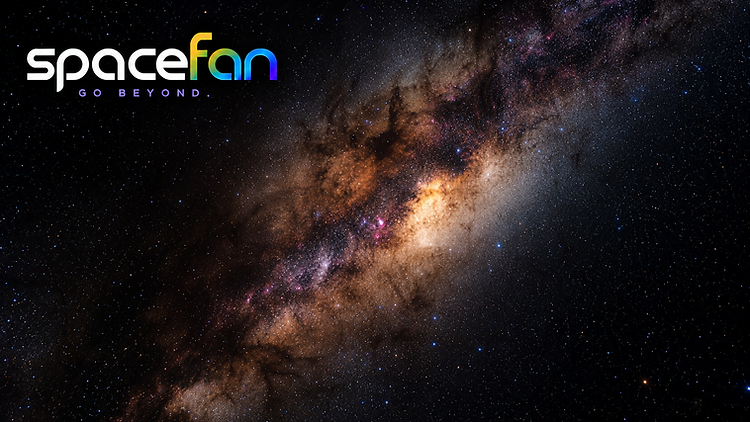
Dense star fields and glowing dust clouds across the center of the Milky Way galaxy.
Image · Space.Fan

The Drop

In space, some pairs are not just orbiting each other; they are actively interacting. Researchers have studied three specific pairs of s, two of which live in a neighbor galaxy called the Small Magellanic Cloud and one in our own Milky Way. These systems are known as eclipsing binaries, meaning the s pass in front of each other from our point of view on Earth, causing their brightness to dip. To learn about these s, astronomers looked at old data gathered by telescopes that measure light. By studying how the light from these systems changes over hundreds of days, researchers could see that these s are quite old and different in temperature. The team found that one is likely pulling material away from the other, a process often called mass transfer. Because these s are so far away, it is hard to see what is happening clearly. The data suggests that the light we see is not just coming from the s themselves. Instead, it is likely coming from a shell or a spinning disk of material that surrounds the s, hiding the hottest parts of the system from our view.
Advertisement

Why It Matters

These systems help scientists understand how s grow and change as they get older. When s exchange mass, it completely changes their life cycle, determining how they will eventually die. By studying these specific pairs, astronomers can better understand how s that once looked like B-type s on the main sequence evolve into the giant, dusty systems we see today.
Advertisement

The Catch

The biggest challenge is that the material surrounding these s acts like a curtain. Because this shell of dust or gas blocks our view, it is very difficult to confirm exactly what is inside. While researchers have some clues about the mass of the s, they need better data from infrared telescopes to see through the dust and get a clearer picture of the smaller, hidden companion s.

Put That in Perspective

These systems were already known to be some of the brightest of their kind in their galaxy. Future studies will likely focus on using infrared light to pierce through the surrounding shells of dust to finally identify the hidden companions that are being obscured.

Source November 14, 2026
T. J. Davidge
Dominion Astrophysical Observatory, Herzberg Astronomy & Astrophysics Research Center, National Research Council of Canada·The Astronomical Journal·10.3847/1538-3881/aeb2f7

Keep Exploring Space