Advertisement
Space.Fan — Go Beyond
ApJ · 12 HR AGO
UniverseSIMULATION

Galaxy Collisions Leave Behind a Hidden Memory in Dark Matter

By Space.Fan Editorial Desk

New research shows that when galaxies crash, they force the invisible dark matter around them to tumble for billions of years.
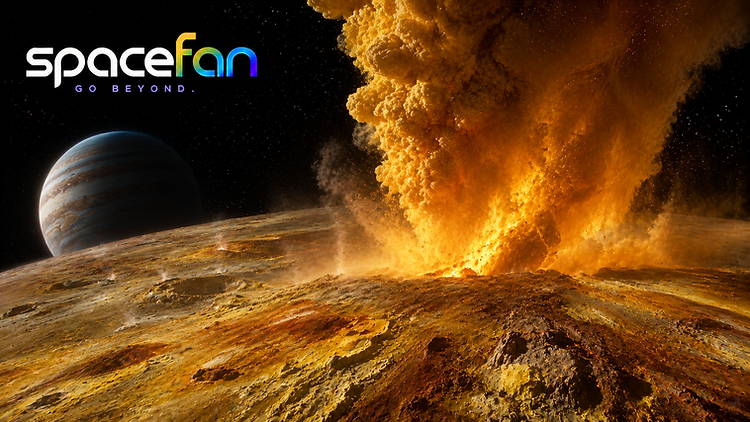
Huge volcanic eruption on the orange surface of Io with Jupiter visible in space behind it.
Image · Space.Fan

The Drop

Everything in space is surrounded by a large, invisible cloud called a dark matter halo. Scientists have long noticed that these halos often spin or tumble, a movement they call figure rotation. A new study used powerful computer simulations to figure out why this happens. They looked at how large galaxies collide with each other and the effect these giant crashes have on the dark matter surrounding them. The team used special computer models to recreate galaxy mergers. They found that when a smaller galaxy falls into a larger one, it acts like a spoon stirring a drink. This motion sends a ripple of energy into the dark matter, forcing it to t spinning. Even if the galaxies hit each other straight on, the pull of gravity is strong enough to t this long-lasting rotation. These simulations showed that the tumbling does not stop once the collision ends. Instead, the dark matter keeps spinning for billions of years afterward. This means that a galaxy’s current rotation might be a record of the last time it experienced a major crash. It is like the dark matter halo is holding onto a memory of its past, which scientists can use to learn about a galaxy’s history.
Advertisement

Why It Matters

This discovery helps scientists turn dark matter into a historical map. By looking at how a halo is spinning today, researchers can guess when that galaxy last went through a major, violent merger. It confirms that these invisible structures are not just sitting still but are constantly shaped by the massive events happening in the universe.
Advertisement

The Catch

This study is based on computer models rather than direct pictures of dark matter, which cannot be seen with telescopes. While these simulations use realistic data, they represent a small number of possible galaxies. Real life in the universe is much more complex, and there may be other forces at work that the simulations do not capture perfectly.

Put That in Perspective

Earlier studies focused on how gas and stars affect galaxy shapes, but this research highlights how the invisible skeleton of the universe—dark matter—also reacts to cosmic accidents. Future research will likely focus on how these spinning halos affect the way stars grow inside the galaxies they surround.

Source October 1, 2026
Neil Ash, Monica Valluri
University of Michigan·The Astrophysical Journal·10.3847/1538-4357/aea14d

Keep Exploring Space