Advertisement
Space.Fan — Go Beyond
ApJL · 3 DAYS AGO
UniverseSIMULATION

Black Holes May Eat Stars in a Giant Game of Bumper Cars

By Space.Fan Editorial Desk

Astronomers think they have found why some galaxies flicker with bright bursts of light like a cosmic strobe lamp.
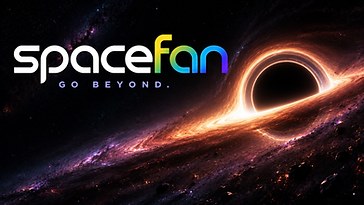
A black hole with a glowing accretion disk in deep space.

The Drop

In the middle of some small galaxies, supermassive s are surrounded by swirling disks of gas and dust. Astronomers have noticed that these spots sometimes let out bright, rhythmic flashes of X-ray light called Quasiperiodic Eruptions, or QPEs. These flashes happen in a steady pattern, but scientists were not sure what caused them. To solve this mystery, researchers used powerful computer simulations to mimic what happens near a . They looked at what would occur if a smaller traveled through the thick gas disk surrounding the giant . When the smashes into the gas, it creates a massive shockwave that lights up the area, much like a pebble causing a splash in a pond. The simulation showed that the thick gas disk acts like a blanket. When the hits it, the light from the crash takes time to push through the gas layers. This timing matches what astronomers see through their telescopes, where the flashes last for a specific, predictable amount of time. This model suggests that the steady timing of these flashes is not random. Instead, it is caused by the orbiting the and hitting the same gas disk over and over again like a repeating car crash in space.
Advertisement

Why It Matters

This finding is important because it connects the strange flickering of distant galaxies to the physical structure of the gas disks around s. By studying how long these flashes last, scientists can actually measure how thick and dense the gas disks are. It helps prove that the light we see from these galaxies is not just random noise. Instead, these eruptions tell a story about the life cycle of s and gas near the strongest gravity traps in the universe.
Advertisement

The Catch

While the simulations match the data well, they are still just computer models. We cannot actually see a hitting a disk in real-time because these events are billions of s away. It is possible that other things, like magnetic fields or different types of gas behavior, could also cause these flashes. More data from space telescopes will be needed to be 100% sure that collisions are the main culprit.

Put That in Perspective

Scientists are excited to see that these light patterns can tell us so much about the hidden structure of galaxies. Future studies will likely look at whether these patterns change over time, which could show us how a star's path changes as it gets closer to a black hole's hungry center.

Source October 1, 2026
ApJL

Keep Exploring Space