Advertisement
Space.Fan — Go Beyond
Nature Astronomy · 8 DAYS AGO
UniversePEER REVIEWED

How Galaxies Clear a Path for Starlight

By Space.Fan Editorial Desk

New research shows how powerful winds from young, crowded galaxies help light travel through space.
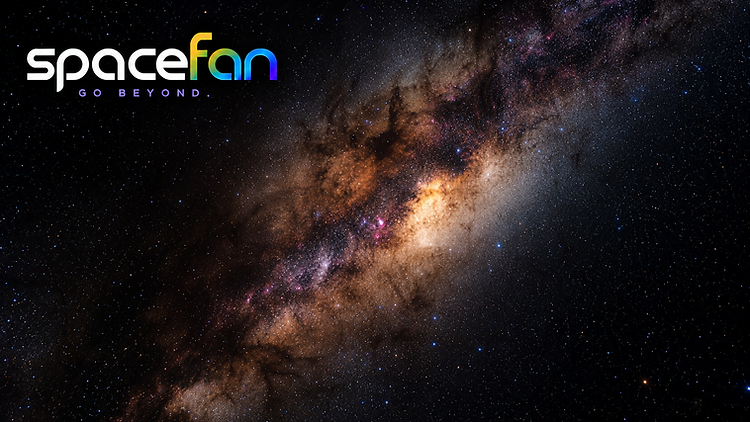
Dense star fields and glowing dust clouds across the center of the Milky Way galaxy.
Image · Space.Fan

The Drop

In the early universe, galaxies were often messy places crowded with young, bright s. These s produce intense light, but this light often gets trapped by thick clouds of gas inside the galaxy. Scientists are studying a process where strong winds caused by clusters push this gas away. This creates clear pathways that allow light to escape into deep space. By looking at how these winds form, researchers are getting a better picture of how galaxies evolve over time. They use high-powered telescopes to observe these compact bursts, which are regions where s are born at a very fast rate. These observations help them track the movement of gas and light in galaxies that are millions of s away. By mapping where the gas is thin and where it is thick, the team can see exactly when the light finally breaks free.
Advertisement

Why It Matters

This process is very important because it explains how galaxies helped shape the early universe. By letting light escape, these small, active galaxies helped make the space between galaxies transparent. This changed the way energy moved throughout the cosmos.
Advertisement

The Catch

While these observations provide a clearer view, the process happens on a scale that is difficult to watch in real time. Because these events are so far away, researchers must rely on models and snapshots of different galaxies to piece together the full story of how winds develop.

Put That in Perspective

Scientists have been studying how light escapes galaxies for a long time. These new findings build on previous work by pinpointing the specific moment when galactic winds become strong enough to clear out gas, which is a major step forward for our understanding of galactic behavior.

Source November 14, 2026
Cody Carr, Renyue Cen, Stephan McCandliss, Jack Ford, Alberto Saldana-Lopez, Claudia Scarlata, Mason S. Huberty, Anne Jaskot, Sophia Flury, M. S. Oey, Ricardo O. Amorín, Sanchayeeta Borthakur, Matthew Hayes, Timothy Heckman, Zhiyuan Ji, Lena Komarova, Alexandra Le Reste, Floriane Leclercq, Rui Marques-Chaves, Leo Michel-Dansac, Göran Östlin, Swara Ravindranath, Michael J. Rutkowski, Daniel Schaerer, Trinh Thuan, Eros Vanzella, Bingjie Wang, Xinfeng Xu
Zhejiang University, University of Michigan, Johns Hopkins University, Stockholm University, University of Minnesota, Williams College, Royal Observatory, Instituto de Astrofísica de Andalucía, Arizona State University, University of Arizona·Nature Astronomy·10.1038/s41550-026-02999-z

Keep Exploring Space