Advertisement
Space.Fan — Go Beyond
ApJL · 10 HR AGO
UniverseSIMULATION

Why Scientists Are Seeing Double When Looking at the Early Universe

By Space.Fan Editorial Desk

A clever math problem is causing confusion about how the first galaxies grew, but experts think they have finally found the hidden reason why.
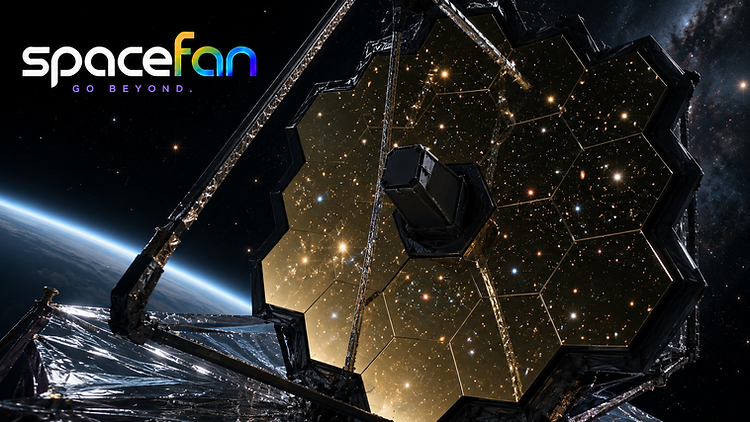
James Webb Space Telescope in space with its gold segmented mirror facing the stars.
Image · Space.Fan

The Drop

For the last ten years, astronomers have been puzzled by the light from the very first galaxies. Some studies suggested these galaxies were making s very quickly, while others suggested the opposite. This created a big disagreement that nobody could quite explain, especially after the James Webb Space Telescope spotted galaxies that were much brighter than anyone expected for that time period. New research suggests that this confusion is not because our data is wrong, but because of a specific math problem that disguises how galaxies look from far away. By using computer simulations, researchers looked at how dark matter and light interact in the early days of the universe. They found that different setups for how galaxies behave can end up looking exactly the same to our telescopes. Because the different pieces of the puzzle seem to cancel each other out, it is very hard for scientists to tell which version of the early universe they are looking at. This hidden trick is known as a structural degeneracy. It means that until we get even better measurements, some parts of the early history of the universe will remain hard to pin down.
Advertisement

Why It Matters

This finding is important because it shows us exactly why previous scientific studies had such different results. Instead of one group being wrong and another being right, it turns out that their math was just looking at the same information from different angles. This provides a single, unified way to understand why the data from the early universe has been so messy and difficult to sort through.
Advertisement

The Catch

This result depends on computer models called simulations. While these simulations are very powerful, they are not direct pictures of the universe. The team notes that we will need more precise data from future observations to truly break this pattern and know for sure which galaxy models match reality.

Put That in Perspective

Scientists are now looking for new ways to observe the shapes and layouts of gas in the early universe, as these patterns might be different enough to finally solve this mystery once and for all.

Source November 22, 2026
Zihan Wang, Huanyuan Shan
University of Oxford, Shanghai Astronomical Observatory·The Astrophysical Journal Letters·10.3847/2041-8213/ae990b

Keep Exploring Space