Advertisement
Space.Fan — Go Beyond
ApJ · 5 HR AGO
UniverseMODEL

How Giant Bubbles in Space Speed Up Cosmic Particles

By Space.Fan Editorial Desk

Scientists have created a new model showing how bubbles made by star winds push space particles to incredible speeds.
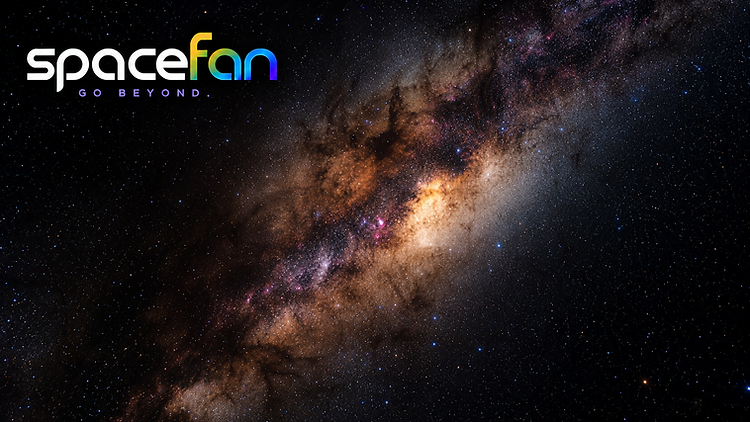
Dense star fields and glowing dust clouds across the center of the Milky Way galaxy.

The Drop

Space is not just empty dark. It is filled with giant bubbles created by strong winds blowing off massive s. These bubbles act like engines. They can grab particles called cosmic rays and push them to very high speeds. Researchers wanted to know exactly how these particles escape from the bubbles and zoom into the rest of space. To find out, they built a math model that tracks these particles over time as the bubble grows and changes. This helps explain how the particles move through the bubble until they reach the outer edge and fly out. The team used a powerful computer tool called CRPropa to simulate these complicated journeys. By creating a one-dimensional math map of the bubble, they could test how different environments inside the bubble change the speed and path of the particles. Their results show that these bubbles are much more efficient at speeding up particles than scientists previously thought. This helps solve a puzzle about where some of the most energetic particles in our galaxy come from.
Advertisement

Why It Matters

This research is important because it changes what we know about how cosmic rays travel. Before this, scientists used simpler ideas to guess how particles moved. This new work shows that time matters; as the bubble ages, it changes the way it handles these tiny particles. This discovery gives astronomers a new way to identify these cosmic-ray factories when looking at data from deep space.
Advertisement

The Catch

This study is a model based on computer simulations, not a direct picture or recording of a real bubble. The researchers made assumptions about how smooth and even these bubbles are. Real bubbles in space might be messy or shaped differently, which could change how the particles move compared to this clean, round simulation.

Put That in Perspective

Astronomers plan to use these findings to look for specific patterns in radiation that they might see coming from real star clusters. By matching this model with future telescope observations, they hope to confirm if these space bubbles are truly the main source of the high-speed particles we see hitting our solar system.

Source November 20, 2026
Lukas Merten, Sophie Aerdker, and Enrico Peretti
University of Wuppertal, Astroparticule et Cosmologie, Ruhr University Bochum, INAF·The Astrophysical Journal·10.3847/1538-4357/aeb41b

Keep Exploring Space