Advertisement
Space.Fan — Go Beyond
ApJ · 2 DAYS AGO
UniverseSIMULATION

How Magnetic Mirrors Supercharge Particles in Deep Space

By Space.Fan Editorial Desk

Scientists have uncovered a powerful way magnetic fields act like mirrors to boost particles to incredible speeds.
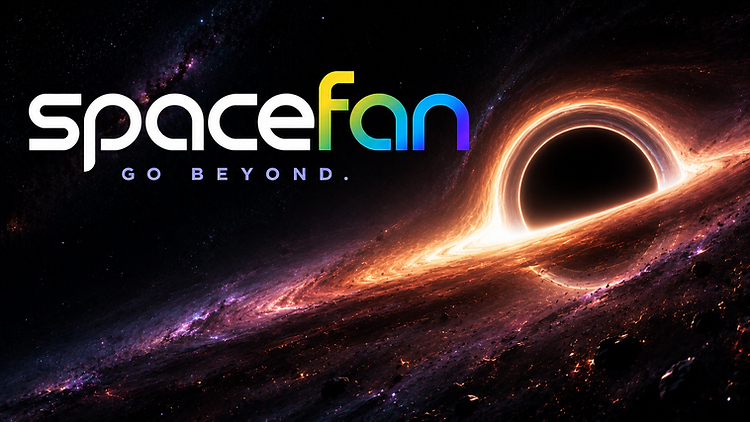
A black hole with a glowing accretion disk in deep space.
Image · Space.Fan

The Drop

Space is not just empty; it is filled with moving clouds of gas and plasma. Inside these clouds, magnetic fields twist and turn in a chaotic process called turbulence. For a long time, researchers have wondered how this process gives tiny particles, like electrons, enough energy to zoom across the galaxy at nearly the speed of light. To find the answer, researchers created a high-tech computer simulation of this space plasma. Think of it like a weather model for space, but instead of tracking rain, it tracks how billions of charged particles bounce around magnetic fields. By running this simulation in 3D, the team could watch exactly how individual particles gain energy. They discovered that magnetic fields can act like moving mirrors. When a particle hits a magnetic mirror, it bounces off and gains a huge boost in speed in one single interaction. The simulation showed that this happens most effectively when the magnetic field is getting stronger, pushing the particles to move faster and further apart from one another. This process does more than just speed particles up. It also acts like a trap that keeps them held in one area, which allows them to hit more magnetic mirrors and gain even more energy. This cycle helps explain how some of the most energetic particles in the universe get their power.
Advertisement

Why It Matters

This discovery helps bridge a gap in our knowledge about cosmic rays. By proving that mirror acceleration is an efficient way to energize particles, scientists can better explain why we see such high-energy particles reaching Earth from deep space. It changes how we model turbulence in space environments, such as near s or remnants, by showing that magnetic mirrors are a key piece of the engine that drives space radiation.
Advertisement

The Catch

This result comes from a computer simulation rather than a direct telescope observation. While simulations are excellent for testing theories, they rely on specific ting conditions that might not perfectly match the complexity of the real, massive magnetic fields found in deep space. It remains to be seen how well this model holds up when compared to future high-resolution data from space observatories.

Put That in Perspective

Scientists have studied particle acceleration for decades, but usually focused on other methods. Now that they have confirmed the importance of these magnetic mirrors, the next step will likely involve comparing these simulation results with real-world observations from space probes to see if the math matches the messy reality of the cosmos.

Source September 24, 2026
ApJ

Keep Exploring Space