Advertisement
Space.Fan — Go Beyond
ApJ · 2 DAYS AGO
Sun & Space WeatherPEER REVIEWED

How Solar Storms Change Over the Sun's Magnetic Cycle

By Space.Fan Editorial Desk

Scientists analyzed over 1,000 solar explosions to reveal how the Sun's activity level shapes space weather.
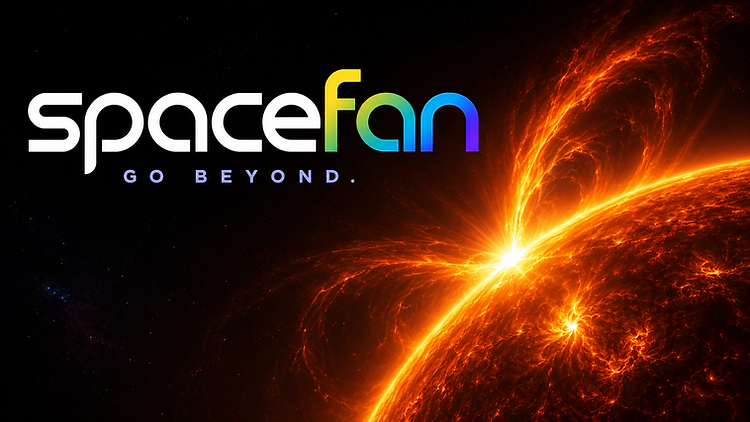
A bright solar flare erupting from the surface of the Sun.

The Drop

The Sun goes through cycles of activity that repeat about every eleven years. Scientists have long known that the Sun becomes more active during certain times, sending out giant clouds of charged gas and magnetic fields called Coronal Mass Ejections, or CMEs. By looking at data from over 1,000 of these solar events, researchers were able to see clear patterns in how these explosions behave as they travel through space. Using a method called superposed epoch analysis, they tracked these events from as close as 0.2 astronomical units to as far as 2.2 astronomical units away from the Sun. When the Sun is in its active phase, it produces CMEs that move faster and pack a harder magnetic punch compared to those released during quieter times. Even when scientists accounted for the speed of the storms, the active-phase explosions remained stronger and more magnetic. This suggests that the way these eruptions t deep inside the Sun is fundamentally different depending on how active the solar cycle is at that moment. As these giant clouds of plasma travel away from the Sun, they expand and change shape. The team found that the magnetic structures within the CMEs lose their strength in a predictable way as they travel further into the solar system. By measuring these changes across thousands of events, the researchers have built a better map of how the Sun's most powerful weather events evolve from t to finish.
Advertisement

Why It Matters

Understanding how these solar storms change is critical for protecting our modern world. These magnetic clouds can interfere with satellite electronics, radio communications, and even power grids on Earth. Knowing how they evolve during different parts of the solar cycle helps experts predict how intense a storm might be by the time it reaches our .

Aurora Tonight

Live NOAA outlook

Slight aurora activity

Mostly Arctic: Alaska, northern Canada, Greenland, and far-northern Europe

Aurora activity36%
Peak Kp tonight: 3.3NOAA nowcast max: 33%Source: NOAA SWPC

Aurora forecasts are probabilistic. Darkness, clouds, local light pollution, and rapidly changing solar-wind conditions affect what you can actually see.

Advertisement

The Catch

While the data set includes over 1,000 events, space weather is incredibly complex and varies from one storm to the next. The study identifies average patterns, but individual solar storms can still be unpredictable. These findings show us the big-picture trends, but they cannot perfectly forecast every single event because local conditions in space can change how a storm behaves on its way to Earth.

Put That in Perspective

Scientists have studied the Sun for centuries, but only recently have we had enough spacecraft positioned throughout the solar system to track these clouds over such a wide range of distances. This research uses data from the HELIO4CAST catalog to create a more complete history of how solar magnetism behaves in deep space compared to previous, more limited observations.

Source September 23, 2026
Yakub Olufadi, Nada Al-Haddad, Florian Regnault, Noé Lugaz, Bin Zhuang, Charles J. Farrugia, Christian Möstl, Emma E. Davies, Eva Weiler
University of New Hampshire, GeoSphere Austria, University of Graz·The Astrophysical Journal·10.3847/1538-4357/ae9fe9

Keep Exploring Space