Advertisement
Space.Fan — Go Beyond
ApJL · 12 HR AGO
Sun & Space WeatherPEER REVIEWED

Sunspots Cluster in Hidden Nests That Affect Solar Activity

By Space.Fan Editorial Desk

Scientists have found that solar activity is not random, but instead organized into nested groups that create lopsided magnetic behavior.
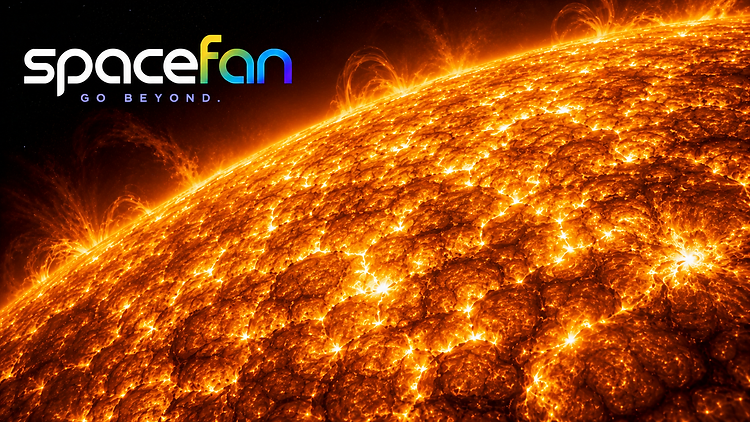
Close-up of the fiery Sun showing bright active regions and looping plasma above its surface.
Image · Space.Fan

The Drop

Our Sun is not always smooth and quiet. It goes through cycles where it becomes very active, producing dark patches called active regions where sunspots form. For a long time, scientists have noticed that one side of the Sun sometimes seems more active than the other. This is known as hemispheric asymmetry. It is like one side of a ball being bumpier than the other side. Researchers decided to look at records of these active regions from three different solar cycles to see if there was a pattern. They used a special computer program to track how these regions grow and cluster together. The results showed that these active regions are not spread out by chance. Instead, they often form in groups that the team calls nests. These nests act like engines that drive the uneven activity we see across the northern and southern halves of the Sun. When the researchers looked closer, they found that these nests are responsible for most of the lopsided activity. When they took the nested regions out of their data, the lopsided effect almost completely disappeared. This means that a small percentage of these active regions are acting in a very specific, non-random way to change how the Sun behaves.
Advertisement

Why It Matters

This discovery helps us understand the engine inside the Sun. By linking these nested regions to the way the Sun's magnetic field changes over time, scientists can better predict solar behavior. It suggests that the Sun has an internal clock or structure that organizes energy in ways we are only just beginning to map out. This moves us closer to predicting how and when the Sun might create intense bursts of activity that can affect technology here on Earth.
Advertisement

The Catch

While this study shows a strong link between nests and lopsided activity, it only covers a small portion of the total solar active regions, estimated at about 6% to 18%. Because the study relies on statistical patterns from past data, it does not explain exactly what physical forces deep inside the Sun are building these nests. There may be other factors involved that we have not yet identified, and future observations will be needed to see if these patterns hold up in upcoming solar cycles.

Put That in Perspective

Scientists have tracked solar cycles for decades, but new computing power allows them to look at the 'neighborhoods' of sunspots rather than just individual ones. Researchers are expected to use this technique to compare these findings with the evolution of the solar magnetic field to see if the nests are part of a larger, long-term cycle.

Source September 24, 2026
ApJL

Keep Exploring Space