Advertisement
Space.Fan — Go Beyond
ApJ · 6 HR AGO
UniverseSIMULATION

How Turbulent Space Flows Act Like Cosmic Particle Accelerators

By Space.Fan Editorial Desk

Scientists have discovered how messy, swirling plasma in space can supercharge tiny particles to high speeds.
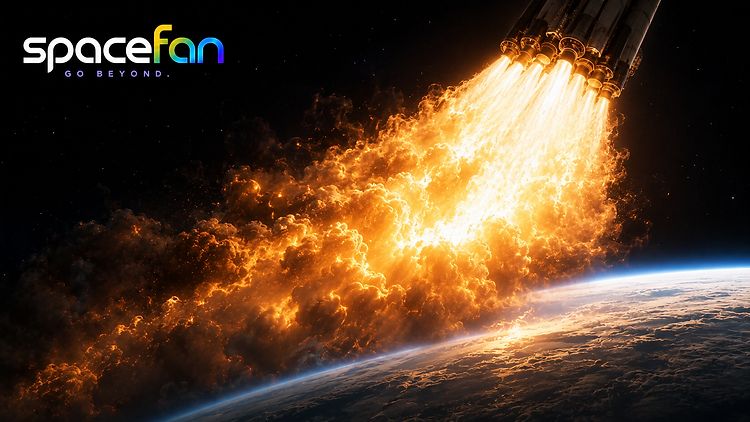
Rocket ascending above Earth with a bright orange exhaust plume.
Image · Space.Fan

The Drop

Space is not just empty vacuum; it is filled with moving gases called plasma that contain magnetic fields. Sometimes, layers of this plasma slide past each other at different speeds, creating a chaotic environment known as turbulence. Researchers wanted to know if this turbulence could act like a playground slide that speeds particles up as they pass through. To test this, the team built a computer simulation that mimicked how magnetic fields and moving plasma interact in space. They used a method called MHD-PIC, which tracks how individual tiny particles react to the forces of electricity and magnetism in a swirling, turbulent flow. This is a very complex calculation because the particles push back against the forces acting on them. The simulation revealed that when these plasma layers rub together, they create electric fields that behave like a complex obstacle course. As particles zip through these fields, they get pushed and pulled. The team found that the particles gain energy because of a clever trick: they spend more time being pushed by the electric fields in a way that speeds them up than they do being slowed down. This process results in a net gain of energy for the particles, turning them into high-speed travelers. The study shows that for this to keep happening, the turbulence must be constantly fed with energy. If the energy source stops, the turbulence dies out quickly, and the particle acceleration comes to a halt.
Advertisement

Why It Matters

This discovery helps explain why we see high-energy particles zooming through space in areas where there are no obvious powerful explosions to launch them. By proving that simple shear flows—where plasma layers slide against each other—can accelerate particles, scientists now have a new model to explain cosmic energy.
Advertisement

The Catch

This result comes from a computer model rather than a direct observation of a specific spot in space. While the physics are based on solid math, the simulation assumes a specific, steady environment. It is possible that in the real, much more chaotic universe, other forces might interfere with this acceleration process or change the way these particles behave.

Put That in Perspective

Scientists have known for a long time that space can be a wild place, but figuring out exactly how these particles get their energy is like solving a difficult puzzle. Researchers will likely use these findings to look at data from space probes to see if they can spot these specific patterns of turbulence in action.

Source October 1, 2026
ApJ

Keep Exploring Space