
James Webb Telescope Reveals Secrets of Dusty Galaxies in the Early Universe
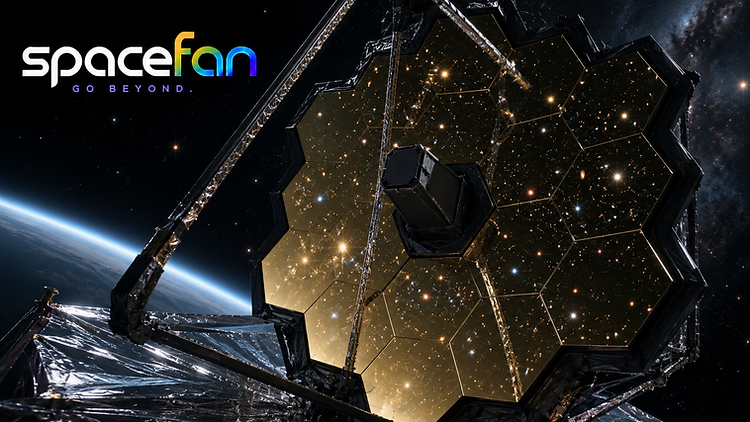
Astronomers used the Webb telescope to study how dust hides the light of stars in 646 galaxies from the very early universe.
The Drop
Why It Matters
The Catch
Put That in Perspective
In the past, we could only guess how dust behaved in the early universe based on what we saw in our own neighborhood. Now, by using the Webb telescope to look at these 646 galaxies, scientists have a much larger sample size to compare against modern galaxies. Future research will likely focus on finding better ways to measure light in these active, star-forming galaxies to ensure our data remains accurate.
Keep Exploring Space

A Dead Galaxy Shows Signs of New Life
Astronomers used a space telescope to spot a galaxy that stopped making stars but suddenly started growing again.

Echoes of the Early Universe Found in Modern Galaxies
Astronomers have discovered that today's galaxies still carry clear patterns formed at the very beginning of the universe.


How Space Ice Mixes Create the Ingredients for Life
New lab experiments show how tiny ice crystals in space transform into complex chemicals needed for building planets and life.

Tiny Storms Keep a Young Star Glowing in Radio Light
Scientists found that constant, miniature star flares are likely what power the steady radio glow of the active star AU Mic.