Space.Fan — Go Beyond
ApJ · 4 HR AGO
UniverseMODEL

Listening to the Inner Heat of Neutron Stars

By Space.Fan Editorial Desk

Scientists have built a new model to understand how heat changes the way neutron stars vibrate, helping us peek into their hidden cores.
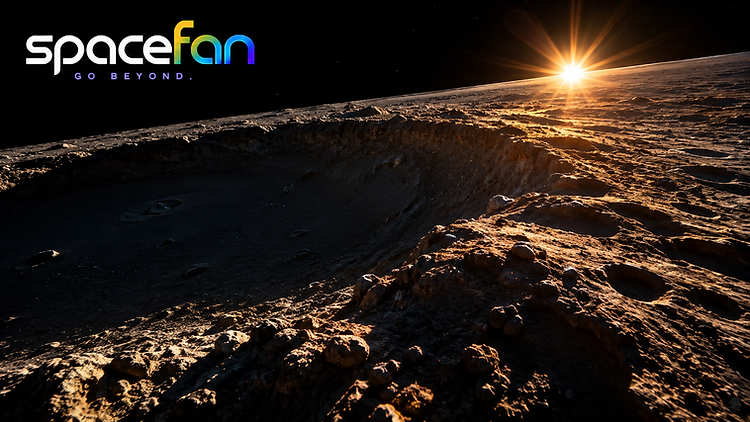
A lunar crater on the surface of the Moon.
Image · Space.Fan

The Drop

s are some of the densest objects in the universe. They are created when massive s run out of fuel and collapse. Because we cannot visit these objects, scientists use math and physics models to understand what is happening deep inside them. This study focuses on how heat impacts the way these s vibrate. These vibrations are called g-modes, and they behave like sound waves moving through the . By studying these waves, researchers can learn about the material that makes up the 's center. Researchers used complex computer models to see how heat changes these vibrations. They found that as a gets warmer, the way the inside material reacts to pressure changes. This movement of particles inside the affects how fast the waves travel and how quickly they fade away. The team discovered that certain properties of nuclear material, specifically something called the symmetry-energy slope, have a big effect on these vibrations. This means the temperature of a young, warm is just as important as its density when calculating how it shakes.
Advertisement

Why It Matters

This research is important because it gives us a new way to identify the internal structure of s. By understanding how temperature changes their vibrations, scientists can better predict how these s behave in space. This acts like a roadmap for researchers who study gravitational waves, which are ripples in space-time caused by massive events like collisions.
Advertisement

The Catch

This study is based on a theoretical model, which means it is a mathematical simulation rather than a direct observation of a real . The results depend on specific assumptions about how nuclear matter behaves under extreme heat and pressure. Because we cannot yet observe these specific vibrations directly from distant s, this work remains a guide for future telescope observations rather than a confirmed measurement.

Put That in Perspective

Scientists have studied neutron star vibrations for years to learn about the physics of the very small. This new work adds the factor of heat into the equation. In the future, researchers plan to use this information to compare their models against real data gathered from future gravitational wave detectors.

Source November 24, 2026
David Morales-Zapien, Prashanth Jaikumar, Thomas Klähn
California State University Long Beach·The Astrophysical Journal·10.3847/1538-4357/aeb1d5

Keep Exploring Space