
Advertisement
Space.Fan — Go Beyond
ApJ · 4 DAYS AGO
UniversePEER REVIEWED

Mapping the Cosmic Web of a Giant Galaxy Cluster

By Space.Fan Editorial Desk

Astronomers have found a better way to trace the invisible bridges of matter connecting a massive, merging cluster of galaxies.
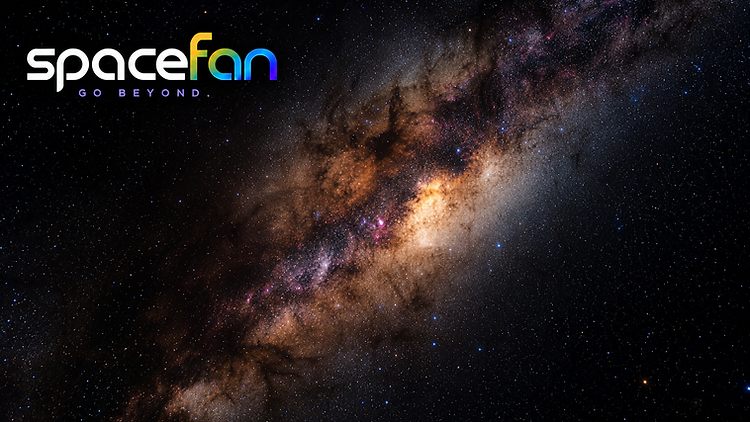
Dense star fields and glowing dust clouds across the center of the Milky Way galaxy.

The Drop

Galaxy clusters are the biggest structures in space. They are like giant cities made of hundreds of galaxies held together by gravity. Between these cities are long, thin bridges of invisible dark matter and gas known as filaments. These filaments act like cosmic highways that help build the cluster over time. A cluster named A2744, often called Pandora's Cluster, is currently in the middle of a massive merger, making it a perfect spot to study how these structures form. Astronomers used powerful cameras on the Magellan telescope to look at how the cluster’s gravity bends light coming from distant s behind it. This technique is called weak-lensing. By seeing how the light is warped, they can map where the hidden dark matter is located. In the past, scientists tried to map these bridges by guessing they all pointed toward one center point. However, this method did not always work well for the complex shapes in A2744. The team created a new method called stepwise 2D tracing. Instead of assuming the whole bridge is a straight line from the center, this method follows the local curves of the matter step by step. This allowed them to see the true path of the filaments more clearly. Their results showed that these invisible bridges match up perfectly with the hot gas clouds already seen by X-ray telescopes. This helps confirm that these filaments are truly connected to the way the cluster is growing.
Advertisement

Why It Matters

Understanding how these filaments connect is vital for figuring out how the universe is put together. This study shows that looking at the local path of matter is more accurate than assuming everything points to a single center. This new mapping method provides a clearer picture of how massive galaxy groups assemble, giving scientists a more reliable way to study the architecture of the cosmos.
Advertisement

The Catch

While the new method works well for the eastern filament, it is still a complex process. The structure of galaxy clusters is messy and constantly shifting because they are merging. Because of this, even with better tracing, the results depend on how carefully scientists set their ting points and how they interpret the faint light bending signals.

Put That in Perspective

Scientists have tracked filaments before, but older models often struggled when clusters were lumpy or merging. By successfully using this stepwise method, researchers now have a tool that can be applied to other messy, merging clusters across the sky to map the cosmic web more accurately than before.

Source September 21, 2026
ApJ

Keep Exploring Space