Advertisement
Space.Fan — Go Beyond
ApJ · 4 HR AGO
DiscoveriesPEER REVIEWED

New AI Tool Listens for Fast Radio Bursts in Deep Space

By Space.Fan Editorial Desk

Scientists created a smart computer program that finds mysterious signals from deep space faster and better than ever before.
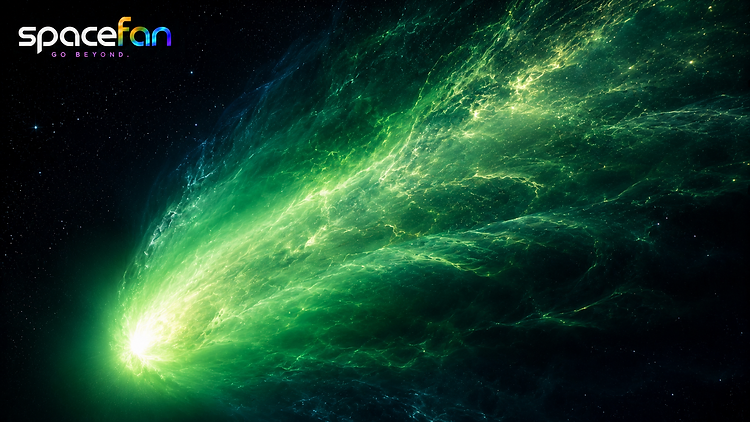
Brilliant green comet with a huge turbulent emerald plasma tail streaming across deep space.
Image · Space.Fan

The Drop

Deep in space, there are sudden, powerful flashes of radio waves called Fast Radio Bursts. These flashes last only a tiny fraction of a second, making them very hard to catch. Scientists use massive telescopes, like the FAST telescope in China, to search for them, but they collect so much data every day that it would take humans years to look through it all. To solve this, researchers built a new artificial intelligence tool called FRBWaveletNet. Instead of just looking at the data, this tool uses a special method that breaks down signals into different layers of detail. It works like a fine-toothed comb, sifting through the messy noise of space to find the hidden patterns of these cosmic flashes. By training the computer to ignore static and background noise, the team made it much better at spotting real signals that were previously missed. When the researchers tested it on real recordings from space, the program correctly identified these bursts with amazing accuracy. It is a big step forward in how we handle the massive amounts of information flowing into our telescopes from across the universe.
Advertisement

Why It Matters

Fast radio bursts are like beacons that travel across billions of s. As they travel through space, they pass through gas and dust between galaxies. By studying how these signals change, scientists can map out the hidden matter that fills the space between s. This new tool helps us collect more of these signals, which acts like a better lens for seeing the structure of the universe.
Advertisement

The Catch

While this tool is very accurate, it is not perfect. It still has to deal with human-made interference, like radio signals from Earth, which can sometimes look like a burst from deep space. Additionally, the tool was tested on specific data sets, and it remains to be seen how well it works across every type of telescope setup or if it might miss brand-new, unknown types of signals that do not look like the ones we already know.

Put That in Perspective

In the past, finding these bursts required a slow and difficult process called dedispersion. This new approach skips that step, proving that smart mathematical filters can handle data more efficiently than older, heavier computer methods.

Source October 2, 2026
ApJ

Keep Exploring Space