Advertisement
Space.Fan — Go Beyond
ApJ · 3 DAYS AGO
DiscoveriesMODEL

New Math Helps Us See What Exoplanet Clouds Are Really Made Of

By Space.Fan Editorial Desk

Scientists have created a better way to model the dusty, messy clouds floating in the atmospheres of planets far beyond our solar system.
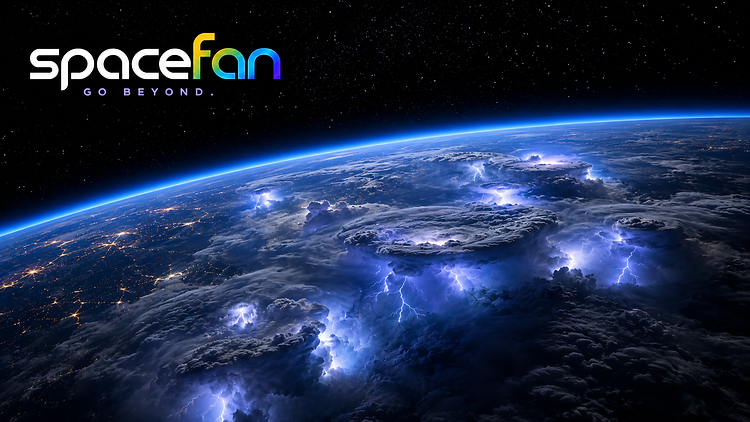
Massive thunderstorms flashing with lightning across Earth's cloud-covered atmosphere as seen from space.
Image · Space.Fan

The Drop

Exos are often hidden behind thick layers of clouds, making it difficult for astronomers to see what is happening on their surfaces. For years, scientists have used simple math models to predict how light interacts with these clouds. These old methods usually assumed that cloud particles were perfect little spheres. However, nature is rarely so neat. The new study shows that cloud particles like forsterite or silicon monoxide can come in complex, jagged, or porous shapes. Using a tool called the T-matrix method, researchers were able to simulate how these strange, non-spherical shapes block and scatter light. They found that if you only use the old math for round particles, you might be missing half the picture. The team created a new set of data that shows how these bumpy, structured particles interact with light much more efficiently than spheres. This allows astronomers to build a much clearer picture of the actual makeup of a distant 's atmosphere.
Advertisement

Why It Matters

Understanding exactly what clouds are made of is the key to identifying the chemical makeup of an exo. By knowing the true shape of the particles, scientists can avoid guessing wrong about what gases or minerals are present. This helps us better understand the climate and potential habitability of s circling other s.
Advertisement

The Catch

This research is based on computer modeling, which means it relies on certain assumptions about how those dust grains are shaped in space. We cannot currently zoom in close enough to see the individual shape of a tiny particle in a 's atmosphere trillions of miles away, so these results represent a theoretical improvement rather than a direct visual confirmation.

Put That in Perspective

In the past, scientists were forced to use simplified models because they did not have the computing power to handle complex shapes. With these new tools, researchers plan to re-analyze existing data from powerful telescopes to see if we have been misinterpreting the weather on distant worlds all along.

Source November 20, 2026
G. Aresu, G. La Mura, G. Mulas, C. Cecchi-Pestellini, M. A. Iatì, S. Rezaei, A. Petralia, D. Locci, G. Micela, F. Saija, R. Saija
INAF, CNR-IPCF, University of Messina·The Astrophysical Journal·10.3847/1538-4357/aeb6da

Keep Exploring Space