Advertisement
Space.Fan — Go Beyond
ApJ · 5 DAYS AGO
Sun & Space WeatherSIMULATION

New Simulation Reveals How Magnetic Energy Moves in Space

By Space.Fan Editorial Desk

Scientists have uncovered how magnetic energy shifts into heat and movement during explosive solar events.
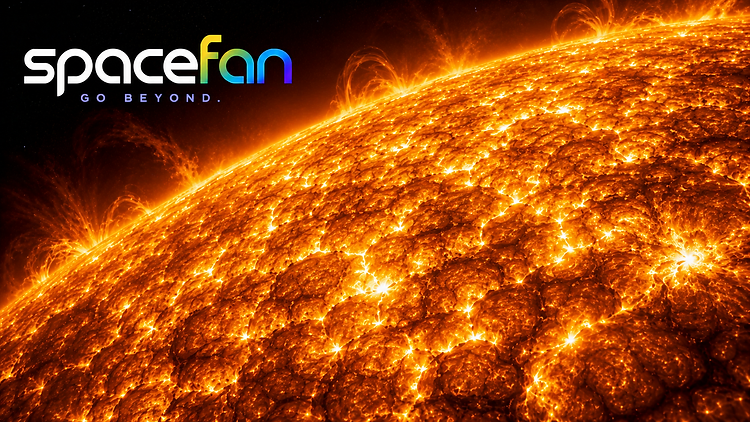
Close-up of the fiery Sun showing bright active regions and looping plasma above its surface.
Image · Space.Fan

The Drop

Space is filled with magnetic fields that act like stretched rubber bands. When these bands snap and reconnect, they release a massive amount of energy. Scientists call this process magnetic reconnection. It is responsible for powerful solar flares and the Northern Lights we see on Earth. For a long time, experts have known that this process releases energy, but they were unsure exactly how that energy transformed into movement or heat. To solve this, researchers built a high-tech computer simulation to watch this process in action. They focused on a specific type of movement called oscillatory reconnection. By using a powerful computer code, they watched how the magnetic fields broke and reformed in a tiny, focused area. This allowed them to track exactly where the energy went as it moved through the system. The team found that energy does not just disappear. Instead, it gets shuffled around by shock waves. They discovered three specific types of shock waves that act like energy highways. As the system shook, energy constantly traded places between the speed of the particles and the heat of the plasma. Most importantly, the simulation showed that the heat and movement are controlled by these shock waves rather than the spot where the magnetic fields actually break. This helps scientists see the 'big picture' of how solar storms gain their power. By watching the system over time, they were able to see that energy is constantly swapping forms, creating a complex cycle of activity.
Advertisement

Why It Matters

Understanding how magnetic energy turns into heat is vital for predicting space weather. When these magnetic snaps happen on the sun, they can shoot charged particles toward Earth. These particles can mess with our satellites, power grids, and GPS systems. This study provides a clearer map of how that energy travels. By knowing which regions of a solar storm are responsible for generating heat versus speed, researchers can build better models to forecast space weather. It moves us away from simple guesses toward a more accurate, step-by-step understanding of the Sun's most explosive events.

Aurora Tonight

Live NOAA outlook

Low aurora activity

Mostly Arctic: Alaska, northern Canada, Greenland, and far-northern Europe

Aurora activity22%
Peak Kp tonight: 2.3NOAA nowcast max: 12%Source: NOAA SWPC

Aurora forecasts are probabilistic. Darkness, clouds, local light pollution, and rapidly changing solar-wind conditions affect what you can actually see.

Advertisement

The Catch

This study is based on a computer simulation rather than a direct observation of the Sun. While the physics used in the model are very detailed, it represents an ideal environment in a computer. The real Sun is much messier and more complex, with different forces and environments that this simulation did not account for. Therefore, it is a ting point for understanding, not a complete picture of everything happening in space.

Put That in Perspective

Scientists have studied steady, unchanging magnetic reconnection for decades. This new research is a major step forward because it looks at the system while it is changing and shaking, which is much closer to what actually happens on the Sun. Researchers hope to test these findings next by comparing them to real data collected by space probes orbiting our star.

Source November 17, 2026
ApJ

Keep Exploring Space