Advertisement
Space.Fan — Go Beyond
ApJ · 4 DAYS AGO
DiscoveriesPEER REVIEWED

New Study Checks Universe's Early History

By Space.Fan Editorial Desk

Scientists found a new way to measure how early stars lit up the universe, possibly showing hints of new physics.
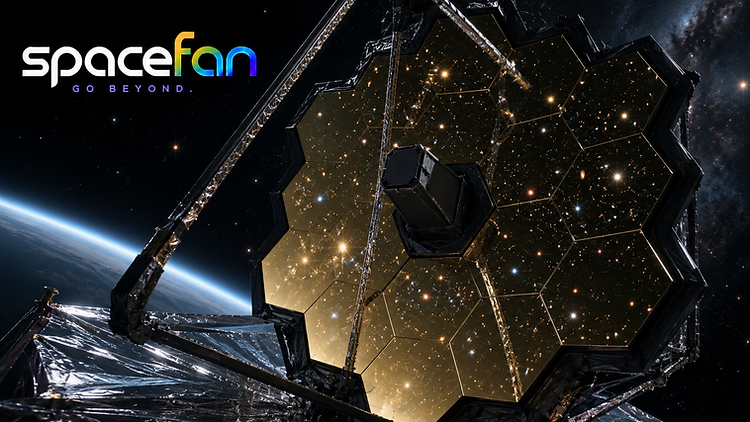
James Webb Space Telescope in space with its gold segmented mirror facing the stars.
Image · Space.Fan

The Drop

Scientists have found a new way to study the universe when it was very young, just after the Big Bang. This period is called the 'Epoch of Reionization.' It's when the first s and galaxies turned on their lights, changing the universe from a dark, foggy place to the clear, ry sky we see today. To do this, researchers looked at how much of the hydrogen gas in the universe was still 'neutral' (had its electrons) at different times. They used information from the faint afterglow of the Big Bang, called the Cosmic Microwave Background (CMB). But they carefully ignored some of the oldest, largest patterns in this afterglow. Instead, they focused on data from faraway quasars and the James Webb Space Telescope (JWST). These observations helped them see how much hydrogen gas was around between about 5 and 14 times after the Big Bang. The results from this new method match what scientists expected. However, when they compared it to other measurements of how the universe has grown, they noticed a small puzzle. It hints that the current standard model of the universe might be missing something. This could mean there are new, undiscovered forces or particles at play.
Advertisement

Why It Matters

This study gives scientists a new tool to check the universe's history. It helps confirm that the universe's story, especially how it went from dark to bright, is being understood correctly. It also provides a potential clue that our current understanding of the universe, called the Lambda-CDM model, might need updating. This could lead to exciting new discoveries about the fundamental laws of physics. The measurements also helped put a limit on how heavy tiny particles called neutrinos can be. These particles are everywhere, but we don't know their exact weight. This study's results help scientists narrow down the possibilities, which is important for understanding the universe's building blocks.
Advertisement

The Catch

While this new method gives a clear picture of the early universe, there are still uncertainties. The way scientists figured out how much hydrogen gas was neutral relies on understanding how light from distant objects travels through it. There's a small chance that the way they modeled this light absorption might have slight errors. Also, the study found a small disagreement with measurements of how galaxies have spread out over time, but it's not a huge conflict yet.

Put That in Perspective

This work offers a way to check the early universe's 'reionization' history without relying on one specific type of measurement from the cosmic microwave background. Scientists will likely use this new method with even more data from telescopes like JWST to refine these measurements and see if the puzzle pieces about the universe's expansion and fundamental particles continue to point towards new physics.

Source September 15, 2026
ApJ

Keep Exploring Space