Advertisement
Space.Fan — Go Beyond
ApJS · 7 DAYS AGO
DiscoveriesPEER REVIEWED

New Tool Finds Hidden Planets in Space

By Space.Fan Editorial Desk

A clever new search tool has helped astronomers spot 10 previously hidden exoplanets by looking at stars in a special part of the sky.
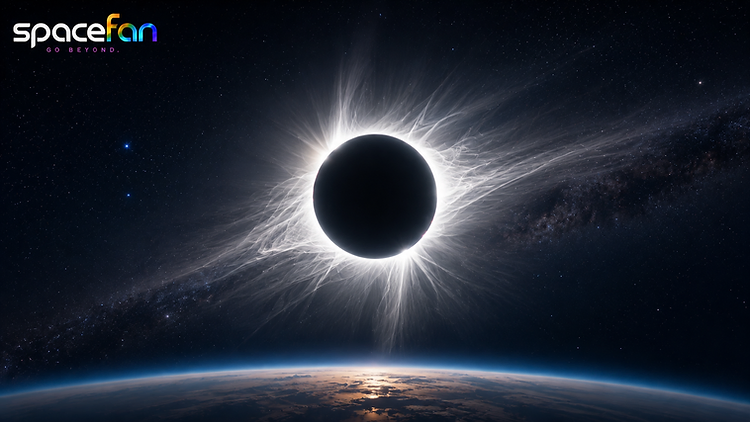
Total solar eclipse with a brilliant white corona suspended above the curved horizon of Earth viewed from space.
Image · Space.Fan

The Drop

Space scientists use the TESS satellite to hunt for s outside our solar system. Usually, TESS looks at s for a short time, making it hard to find s that take longer than 10 days to orbit their suns. However, TESS keeps a steady eye on certain spots in the sky called Continuous Viewing Zones. These areas allow researchers to watch s for a much longer time. To make the most of this data, a team created a new computer program called COUNTESS. This tool is built to scan long records of light and spot the tiny, rhythmic dimming that happens when a passes in front of its . The researchers tested the program on a large group of over 26,000 s in the northern part of the sky. By using the new program, the team successfully found 115 s that astronomers already knew about. More importantly, the tool discovered 10 brand-new candidates. Among these, two were confirmed to be sub-Neptunes, which are s slightly smaller than Neptune. These findings prove that the new program is a powerful way to search for distant worlds that other methods might miss.
Advertisement

Why It Matters

This discovery matters because it helps astronomers build a better map of the galaxy. By finding s with longer orbits, scientists can compare these systems to ones found by older missions like Kepler. This helps us learn if our solar system is common or rare. Understanding how many s exist in these specific zones gives us a better census of the galaxy. It creates a solid foundation for future missions to study the atmospheres of these distant s in more detail.
Advertisement

The Catch

While these 10 candidates passed initial tests, they are still considered candidates. Astronomers need to do more observations to be 100% sure that every single one is a and not a different type of space object or a acting in a tricky way.

Put That in Perspective

In the history of space discovery, finding planets has evolved from spotting huge gas giants to detecting small rocky worlds. This new method allows researchers to look at the same stars for longer periods, filling in the gaps in our knowledge that shorter surveys left behind.

Source September 19, 2026
ApJS

Keep Exploring Space