Advertisement
Space.Fan — Go Beyond
ApJS · 6 DAYS AGO
DiscoveriesPEER REVIEWED

Gravity from Twin Stars Changes How We Measure Alien Planet Weights

By Space.Fan Editorial Desk

A new study reveals that nearby sibling stars can trick our measurements, making some planets appear heavier or lighter than they really are.
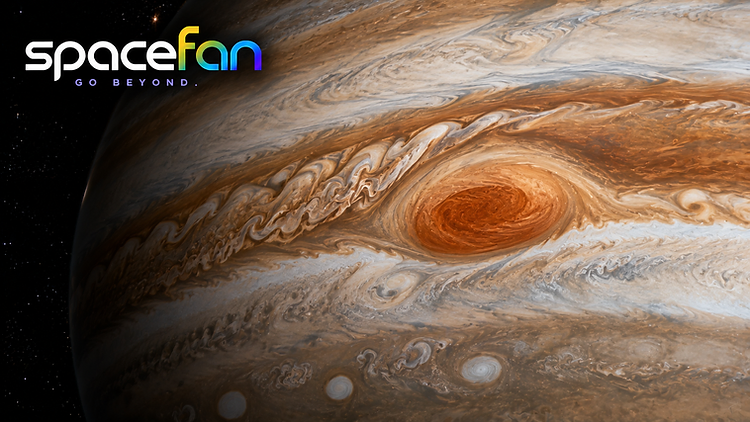
Jupiter's Great Red Spot storm visible from space.
Image · Space.Fan

The Drop

Astronomers have discovered that when a orbits just one in a binary system, its neighbor can pull on it in unexpected ways. For years, scientists have used telescopes like Gaia and TESS to study these s. They look for tiny wobbles in a 's light to figure out how big and heavy a is. However, this method usually assumes the is alone. By using a new math model, researchers realized that a second 's gravity can mess up these calculations. The team looked at 40 different s orbiting in these crowded neighborhoods to see how much their weight estimates were off. They found that for smaller s, the old way of measuring was wrong by as much as 20 percent. Even for larger, Jupiter-sized s, the old calculations were off by about 7 percent. This shows that we have been miscalculating the mass of many worlds because we ignored the tugging influence of their companions. To fix this, the scientists used a technique called N-body modeling. This is a computer process that tracks how all the gravity in a system acts on a at the same time, rather than just looking at the main host . This gives a much more accurate picture of how these s move and how much they actually weigh.
Advertisement

Why It Matters

This discovery is a big deal because we rely on accurate weights to understand what s are made of. If our weight measurements are wrong, we might guess that a is made of gas when it is actually made of rock. This study helps clean up our records of the galaxy by correcting mistakes in the data for dozens of known worlds. It also helps us better understand why certain types of s are rare in some areas, like the mysterious gaps in sizes we see in space.
Advertisement

The Catch

While this new model is more precise, it still relies on computer simulations to guess the unseen gravitational effects. We cannot directly see the gravity of these distant binary s; we can only calculate it. Furthermore, this study focused on 40 specific s, so it is possible that other binary systems have different features that this model did not account for yet.

Put That in Perspective

In the past, astronomers often treated star systems as simple, lonely pairs. Now, as our telescopes become sharper, we are learning that space is much more crowded and interconnected. Future studies will likely use this improved math to double-check the thousands of other planets found in binary systems to see if their sizes need to be corrected too.

Source September 19, 2026
ApJS

Keep Exploring Space