Advertisement
Space.Fan — Go Beyond
Phys.org · 19 HR AGO
Sun & Space WeatherSIMULATION

Scientists Use Computer Models to See How Solar Tornadoes Launch Jets of Plasma

By Space.Fan Editorial Desk

New simulations show how swirling solar winds and magnetic energy combine to launch powerful, rotating jets from the Sun's surface.

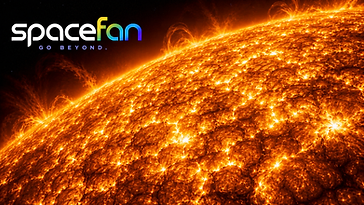
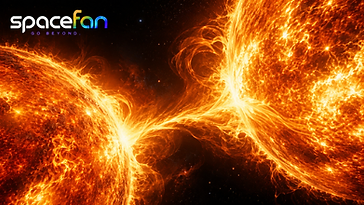
A computer-simulated 3D view showing a swirling magnetic tornado structure launching a jet of plasma from the Sun surface.
Image · Phys.org

The Drop

Our Sun is a busy place filled with tiny, slender jets of hot gas called spicules. These jets act like fountains, lifting cool material from the surface of the Sun high up into its outer atmosphere, known as the corona. While scientists have known about these jets for a long time, they were not sure exactly how they ted or how much energy they carried. To solve this mystery, a team of researchers built a highly detailed computer model of the Sun to watch these events in 3D. By using a powerful tool called the MURaM code, they were able to recreate the conditions found on the Sun's surface. The team watched as small whirlpools, or vortices, formed between the bubbling granules on the surface. These whirlpools acted like spinning tops, twisting the Sun's magnetic field lines into a shape that looks like a tornado. As these magnetic tornadoes spun and rose higher, they triggered a process called magnetic reconnection. This process acts like a rubber band snapping, which helps shoot the hot plasma upward into space as a rotating jet. The team found that pressure from the gas pushes the plasma up from the bottom, while the magnetic energy takes over once the jet gets higher up.
Advertisement

Why It Matters

Understanding how these jets form is a big deal for space science. The Sun's corona is surprisingly much hotter than its surface, and scientists have been trying to figure out why for decades. These jets carry significant amounts of energy and mass from the lower layers up into the corona. By learning how these magnetic tornadoes act as fuel lines for the corona, researchers are one step closer to solving the puzzle of why the outer atmosphere of our stays so scorching hot.
Advertisement

The Catch

Because this study relies on a computer simulation rather than a direct photograph, the results are limited by the accuracy of the computer code. The researchers created a model to represent the Sun, but a simulation can never perfectly capture every single detail of the real, chaotic solar environment. While these findings show a likely way that these jets form, future observations from high-resolution space telescopes will be needed to confirm that these magnetic tornadoes act exactly the same way in real life.

Put That in Perspective

Scientists have studied solar spicules for years, but seeing them behave as rotating tornadoes in a simulation helps clear up confusion about their movement. Researchers will likely use these findings to compare against data from current and future space telescopes to see if they can spot these specific magnetic signatures in the real solar atmosphere.

Source November 25, 2026
Li Yali
Chinese Academy of Sciences, University of Science and Technology of China, University of Sheffield·Astronomy & Astrophysics·10.1051/0004-6361/202661571

Keep Exploring Space