
Advertisement
Space.Fan — Go Beyond
PSJ · 5 DAYS AGO
Asteroids & CometsPEER REVIEWED

Secrets of Comet ZTF Revealed by Infrared Light

By Space.Fan Editorial Desk

Scientists used a powerful telescope to scan a famous green comet and found a surprising mix of ice and gas hidden inside.
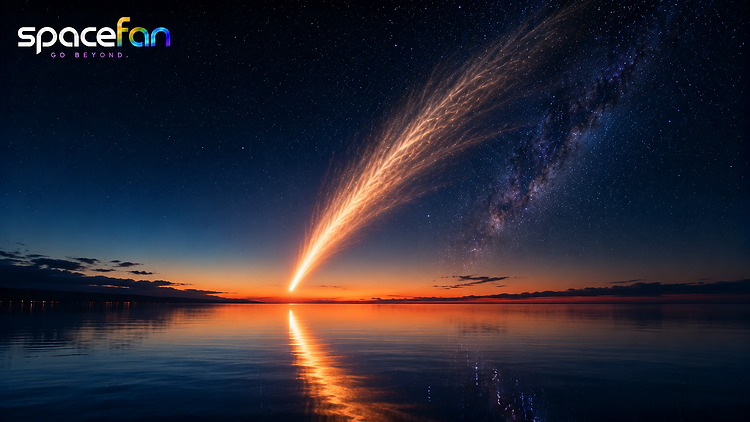
Fiery orange comet descending over a calm twilight lake with its glowing trail reflected across the water.
Image · Space.Fan

The Drop

In early 2023, a bright visitor named C/2022 E3 (ZTF) zoomed past Earth. Astronomers took this special chance to get a closer look at what the was made of. By using a tool called iSHELL at the NASA Infrared Telescope Facility, they were able to peer through the 's outer cloud of dust and gas. They found many different types of gases, including water vapor, methane, and simple forms of sugar-like molecules. To see these, the team looked for special glows, called fluorescent emissions, that happen when sunlight hits the gases in the . They pointed their telescope in different directions to map out where these gases were coming from. Surprisingly, most of the chemicals they found were less abundant than what we usually see in other s from the far-off Oort cloud. This was not true for every chemical, though. One specific gas, called OCS, was present in amounts that matched what experts expected to see. The team also noticed that the was not releasing gas steadily. The way the spun seemed to change how much water vapor it let out. They even saw signs of icy grains melting away from the 's main body, which kept the area around it warmer than expected as it moved through space.
Advertisement

Why It Matters

Understanding what s are made of is like reading a recipe for the early solar system. Because s are essentially frozen leftovers from when our sun and s were born, they act as time capsules. By checking how much gas a releases, scientists can figure out what ingredients were floating around billions of years ago. This study is important because it shows that s can be quite different from one another. Since this was missing some common chemicals, it helps researchers refine their models of how space objects change as they get closer to the heat of the sun.
Advertisement

The Catch

While the team gathered a lot of data, they noted that the amount of water vapor coming from the changed based on its rotation. This makes it harder to get a perfectly clear picture of the overall composition, as one side of the might look different than the other depending on when the telescope is looking.

Put That in Perspective

Comets from the Oort cloud are rare visitors, so every chance to study one helps fill in the gaps of our history books. This research provides a detailed map of the comet's 'coma,' or atmosphere, which sets a high standard for how we study future comets that enter our neighborhood.

Source September 19, 2026
NASA Infrared Telescope Facility·The Planetary Science Journal

Keep Exploring Space