Advertisement
Space.Fan — Go Beyond
ApJ · 6 DAYS AGO
UniverseMODEL

Solving the Mystery of Our Galaxy's Spinning Neutron Stars

By Space.Fan Editorial Desk

Scientists have created a new computer model to explain why some neutron stars behave so differently across the Milky Way.

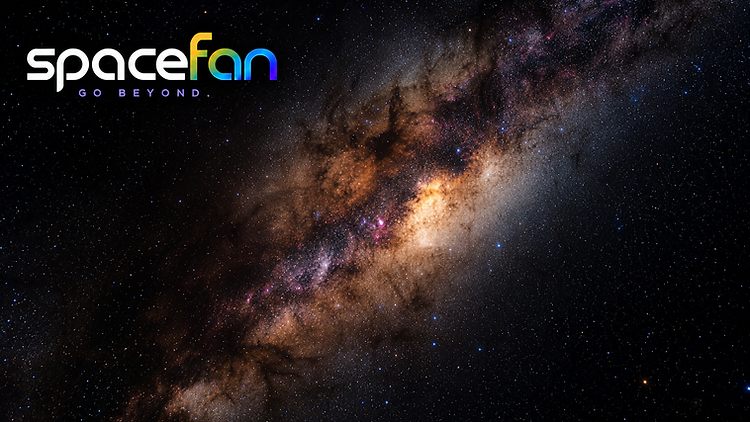
Dense star fields and glowing dust clouds across the center of the Milky Way galaxy.
Image · Space.Fan

The Drop

Neutron stars are the super-dense leftovers of dead stars. They come in many types, like radio pulsars that blink like lighthouses, magnetars with intense magnetic fields, and quiet X-ray stars. For a long time, it was hard to tell if these were all the same type of object acting differently, or if they were completely separate things. Researchers wanted to know how these stars were born and how they change over time. To solve this, they built a complex computer simulation that tracks how these stars grow, spin, and release energy as they age. The team used a special kind of artificial intelligence to compare their computer model with real data we have collected from space telescopes. By looking at how these stars shine in radio waves and X-rays, they were able to trace back the history of these objects. They discovered that most of these stars likely start their lives with one of two specific strengths of magnetic fields. This two-group pattern helps explain why they look so different later in their lives. The team also figured out that about three or four new neutron stars are born in our galaxy every hundred years.
Advertisement

Why It Matters

This model is a major step forward because it connects different types of dead stars into one family tree. By understanding the birth properties of these stars, researchers can better predict how they act as they age. This helps scientists recognize these stars as the engines behind massive space events, like bright explosions or mysterious bursts of radio waves that we see coming from deep space.
Advertisement

The Catch

Because this research relies on a computer simulation, it is only as accurate as the assumptions put into the model. While the model matches a lot of what we see in the sky, it cannot observe every single neutron star in the galaxy. There might be rare types of stars or unusual conditions that the model does not fully account for yet.

Put That in Perspective

Scientists have long suspected that these different stars might be related, but connecting them has been difficult because they are so far away and hard to study. This new work provides a clear path for future studies to test if other types of space objects fit into this same family tree.

Source September 10, 2026
ApJ

Keep Exploring Space