Advertisement
Space.Fan — Go Beyond
ApJL · 7 DAYS AGO
Sun & Space WeatherSIMULATION

Solving the Mystery of Solar Flare Hot Starts

By Space.Fan Editorial Desk

Scientists have discovered why the sun warms up before a massive solar flare erupts, clearing up a long-standing solar mystery.
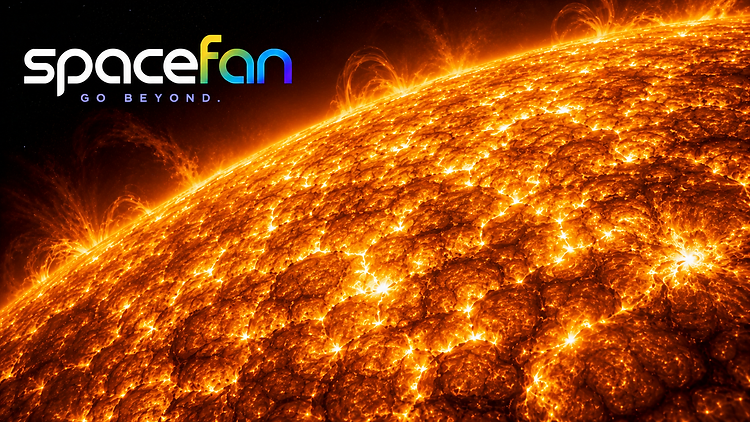
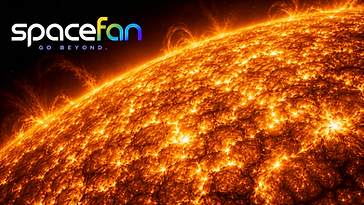
Close-up of the fiery Sun showing bright active regions and looping plasma above its surface.
Image · Space.Fan

The Drop

Solar flares are giant explosions on the sun that send high-energy particles flying into space. For a long time, researchers have noticed that the sun gets very hot right before a flare begins. This is called the hot onset. Until now, this was confusing because the standard model predicted the heating should happen after the flare ts, not before. By using advanced computer models, scientists were able to simulate how magnetic fields around the sun act during these moments. They found that a specific part of the magnetic field, called the guide field, acts like a knob that controls how the sun releases energy. During the first stage, the guide field is strong and traps heat, warming the plasma to millions of degrees without sending off fast-moving particles. As this field weakens, the sun enters a second stage where it suddenly releases a blast of high-speed particles. This discovery shows that the sun naturally transitions through these phases on its own.
Advertisement

Why It Matters

This model is a major step forward because it connects two parts of a solar flare that seemed disconnected before. By showing that the changing magnetic guide field creates both the heat and the particles, scientists no longer need to search for a hidden trigger to t the process. It helps us understand the life cycle of a solar flare from t to finish.
Advertisement

The Catch

While this computer simulation matches what we observe in space, it is a simplified look at a very complex system. The researchers used a model called kglobal to mimic physics, but real solar events involve many other variables that might change how these fields evolve in the actual atmosphere of the sun.

Put That in Perspective

Scientists have studied solar flares for decades, but new technology allows for better computer simulations than ever before. Future research will likely focus on comparing these computer-made results with more detailed observations from space telescopes to see if they perfectly match reality.

Source September 21, 2026
H. Da, J. F. Drake, M. Swisdak
University of Maryland·The Astrophysical Journal Letters·10.3847/2041-8213/aea4ad

Keep Exploring Space