Advertisement
Space.Fan — Go Beyond
ApJS · 12 HR AGO
Sun & Space WeatherPEER REVIEWED

Stellar Flares Are Common on Dancing Star Pairs

By Space.Fan Editorial Desk

New research shows that stars spinning around each other are prone to powerful bursts of energy, which could affect nearby planets.
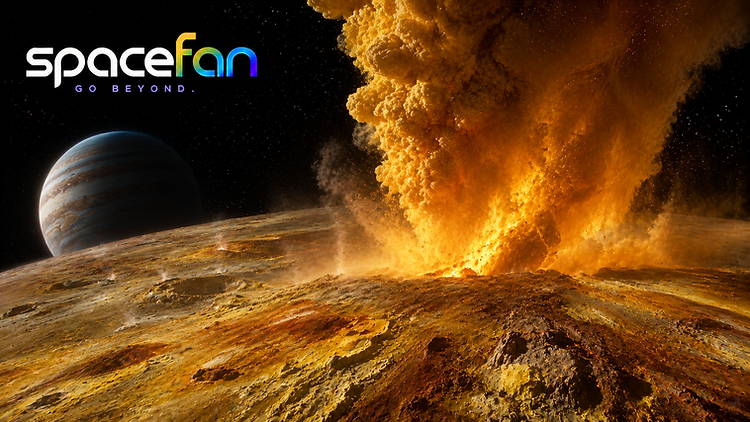
Huge volcanic eruption on the orange surface of Io with Jupiter visible in space behind it.
Image · Space.Fan

The Drop

s often come in pairs called eclipsing binaries, where two s orbit one another and pass in front of each other from our point of view. Scientists wanted to see if these pairs have frequent stellar flares, which are sudden, bright bursts of light and radiation. To find out, researchers used data from NASA's TESS telescope, which watches s for changes in brightness, along with information from the Gaia mission about the s themselves. The team created a new computer program to scan through more than 3,000 of these pairs and look for telltale signs of flaring activity. They found that flares are surprisingly common, especially in smaller, cooler s. In fact, more than 60 percent of the M-type s in their study showed signs of flares. The team discovered that flares on these double- systems release more energy and last for a longer time than flares on s that live alone. These findings suggest that the special environment created by two s orbiting each other plays a big role in how often and how strongly they erupt.
Advertisement

Why It Matters

Understanding how often these s flare is important for finding s that might support life. If a near a erupts with large amounts of energy, it can change the environment on that 's surface or even strip away its atmosphere. By studying these pairs, scientists can better predict which systems might be too dangerous for life to exist, helping them focus their search for habitable worlds.
Advertisement

The Catch

While this study looked at a large number of s, it only provides a general view of how they behave. The researchers noted that gravity between the two s seems to affect the flares, but they do not yet fully understand every way this interaction works. Because these are complex systems, it is possible that other hidden factors are still influencing the results.

Put That in Perspective

Scientists have historically studied flares on individual stars like our own Sun. By moving to a large-scale study of binary stars, researchers are now uncovering how the gravitational dance of two stars creates a much more active environment than we see in single-star systems.

Source October 3, 2026
ApJS

Keep Exploring Space