Advertisement
Space.Fan — Go Beyond
ApJS · 10 HR AGO
Sun & Space WeatherPEER REVIEWED

New AI Tool Helps Scientists Track Solar Storm Features

By Space.Fan Editorial Desk

Researchers have created a smarter computer program to better follow the changing shapes of solar filaments on the Sun.
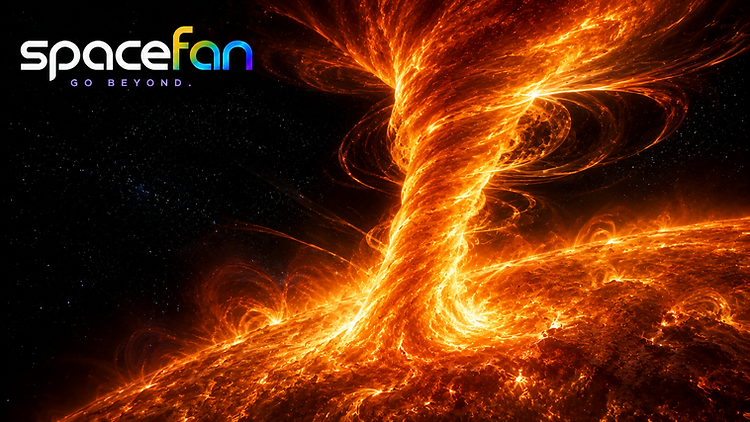
Huge twisting prominence of glowing plasma erupting above the surface of the Sun.
Image · Space.Fan

The Drop

The Sun is home to massive loops of gas called solar filaments. These structures look like dark, long ribbons floating above the surface. Tracking these filaments is tricky because they are constantly stretching, breaking, and merging. To make matters worse, when we look at the Sun, our view can get distorted, making one filament look like several disconnected pieces. This makes it very hard for computers to follow them over time. Scientists have now built a new computer tool to solve this problem. Instead of looking at images piece by piece, the program treats filament parts like nodes in a giant web, or graph. By using a new method called multiplicative aggregation, the AI can look at the relationships between these pieces much more effectively. It can now better guess if two fragments belong to the same filament, even if they look different than they did a moment ago. This technology relies on high-resolution images taken in a specific color of light known as H-alpha. By training the AI on these detailed photos, the team created a way to turn messy, shifting snapshots into a clear story of how a filament moves. The results show that this new way of thinking helps the computer identify these features with much higher accuracy than older, simpler methods.
Advertisement

Why It Matters

Understanding how these filaments move is vital for space weather forecasting. These features can suddenly erupt and send clouds of solar particles toward Earth. By accurately tracking these structures, researchers can better predict when and how a solar eruption might happen. This tool turns raw, confusing data into clear patterns, helping scientists stay one step ahead of the Sun's activity.

Aurora Tonight

Live NOAA outlook

Fair aurora activity

Best odds in Alaska, northern Canada, and far-northern Europe

Aurora activity44%
Peak Kp tonight: 4.7NOAA nowcast max: 26%Source: NOAA SWPC

Aurora forecasts are probabilistic. Darkness, clouds, local light pollution, and rapidly changing solar-wind conditions affect what you can actually see.

Advertisement

The Catch

While this tool is great at matching pieces of a filament together, it is still a computer model. It relies on how the training data is set up and cannot perfectly account for every single type of solar distortion. Further testing is needed to see if it performs just as well during very active solar storms when the images become even more complex.

Put That in Perspective

Scientists have spent years trying to automate the tracking of solar features. This new graph-based approach is a big step up from traditional computer vision methods. Researchers will likely look to apply this same AI structure to other solar features to see if it can map the Sun’s surface behavior in even greater detail.

Source October 3, 2026
ApJS

Keep Exploring Space