
Advertisement
Space.Fan — Go Beyond
AJ · 7 DAYS AGO
UniversePEER REVIEWED

TESS Telescope Reveals Hidden Secrets of 83 Star Pairs

By Space.Fan Editorial Desk

Astronomers used a space telescope to get a better look at 83 pairs of stars that were long misunderstood.
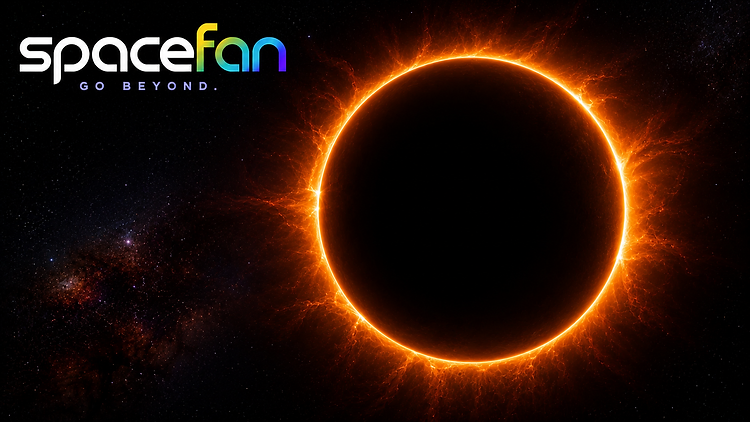
Dark eclipsed solar disk surrounded by a brilliant orange ring of fire and turbulent glowing corona against deep space.
Image · Space.Fan

The Drop

When two s orbit each other, they are called binary s. Sometimes, they pass in front of each other from our view, creating an eclipse. For a long time, scientists had a hard time figuring out exactly what was happening in 83 of these systems because they lacked clear data. To solve this, researchers turned to the Transiting Exo Survey Satellite, or TESS, which is a powerful telescope floating in space. By looking at the bright and dim patterns of light from these s, the team was able to map out how they move and how hot they are. The researchers used a special computer program to build models that explain how these s behave. They found that many of these pairs did not fit into the standard categories that astronomers usually use. Some s that looked like they were touching were actually separated by a gap, while others acted in ways that did not make sense with old maps of evolution.
Advertisement

Why It Matters

This research is important because it updates our knowledge of how s change and age. By fixing errors in how these s were labeled, scientists now have a more accurate map of the galaxy. This helps researchers better understand the different ways s can interact, which is key to learning how the universe works on a grand scale.
Advertisement

The Catch

While the computer models used here are very advanced, they rely on interpreting light patterns that can be tricky. Even with high-tech data, some systems are so far away or so complex that the models might still have small errors. The team also noted that some systems behave strangely and do not fit into any known group yet, meaning more study is needed.

Put That in Perspective

Astronomers have been studying these types of stars for a long time, but new tools like TESS allow us to see details that were invisible before. These 83 stars were previously considered neglected because nobody had looked at them closely in many years. This work acts as a clean slate for future studies of binary systems.

Source September 20, 2026
Martin Vaňko, Matúš Kamenec, Pavol Gajdoš, Theodor Pribulla, Reddy Charan Reddy Munagala, Štefan Parimucha
Astronomical Institute of the Slovak Academy of Sciences, Institute of Physics, Faculty of Science, University of Pavol Jozef Šafárik·The Astronomical Journal·10.3847/1538-3881/ae9a7b

Keep Exploring Space