Advertisement
Space.Fan — Go Beyond
ApJ · 1 HR AGO
DiscoveriesPEER REVIEWED

Watching a Young Binary Star System Feed on Gas

By Space.Fan Editorial Desk

Scientists used telescopes on Earth and in space to watch how a pair of stars pulls in material to grow.

Earth seen from space with sunlight breaking over the horizon.
Image · Space.Fan

The Drop

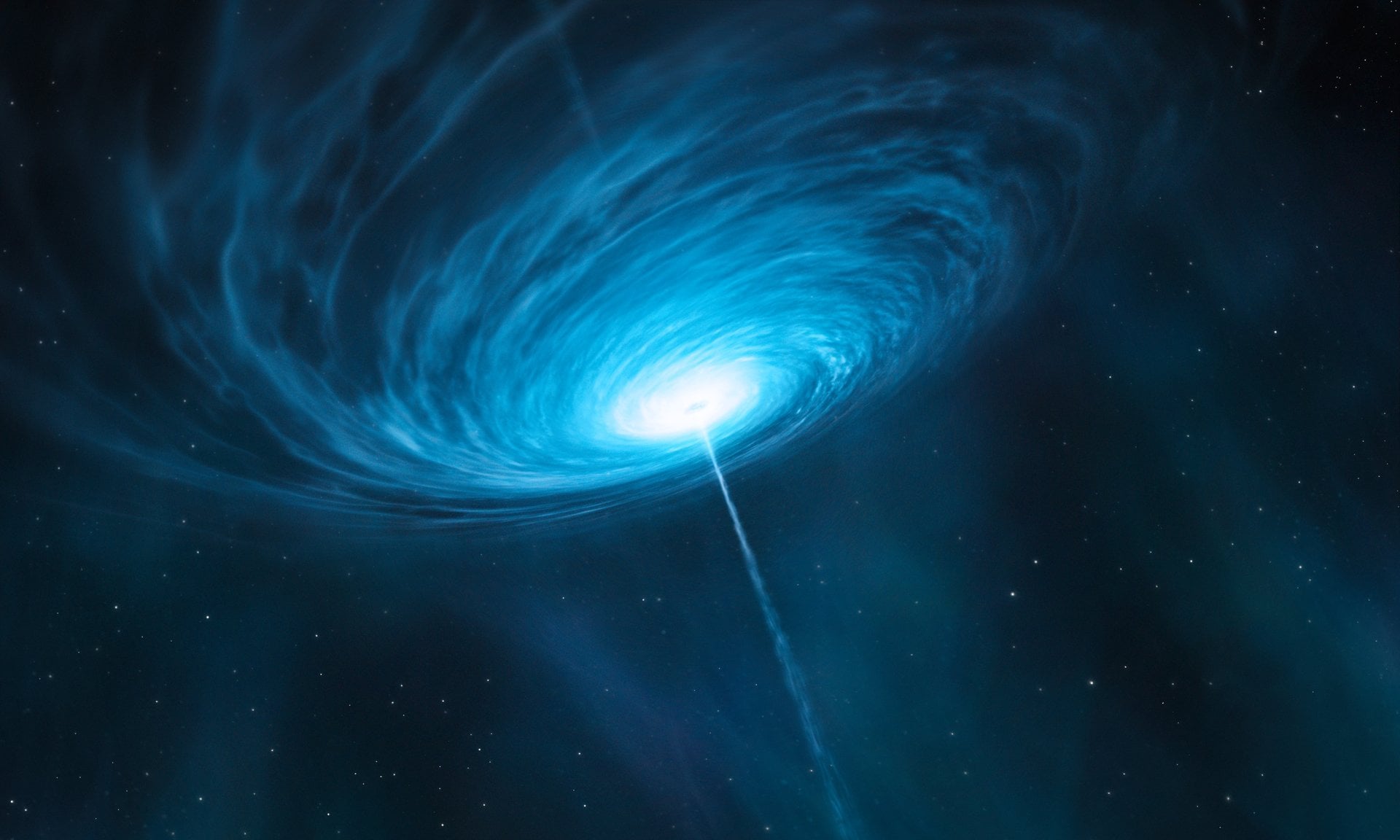
In space, young s are often surrounded by a swirling disk of gas and dust. This is where s are born. A system called DQ Tau is special because it features two s that orbit each other every 16 days. As they dance around, they pull on the nearby gas, creating bright bursts of light that show the s are feeding. Researchers wanted to know exactly how this gas moves during those feeding frenzies. To study this, a team looked at the system over 40 days using seven different tools. They used the powerful James Webb Space Telescope and a ground-based telescope called the IRTF. By combining these views, they could track how the gas changed as it got pulled toward the s. They focused on catching light from carbon monoxide and water vapor, which are key parts of these -forming disks. They found that the gas behaves differently than expected. Instead of flashing bright every time the s feed, the cloud of gas changes slowly over several weeks. It seems the gas cools down and moves further away from the s after a burst of feeding. This means the way s eat is much more complicated than a simple on-and-off switch. This study shows that the environment around a young system is very dynamic. The gas seems to pile up at the edge of the disk before being pulled in. This happens every few orbits, though it is not yet clear exactly what causes this specific pattern of activity.
Advertisement

Why It Matters

This research is important because it shows us how binary systems manage the gas in their disk. By watching the light from water and carbon monoxide, scientists can see the physical changes in the gas directly. This confirms that the movement of the disk is more important than the chemistry of the gas when it comes to these light bursts. Understanding this process helps astronomers learn how s gain mass and how s might eventually form in these crowded environments. It rules out the idea that chemical changes cause the quick brightness jumps, pointing instead to the physical dance of the gas near the s.
Advertisement

The Catch

While the data is very detailed, the researchers still do not know exactly why the system follows this specific timing pattern. The study only covers a few feeding bursts, so it is possible that the system acts differently over longer periods of time. More observations will be needed to see if this pattern holds up over many years.

Put That in Perspective

Scientists have monitored these types of systems for a long time, but combining space-based infrared views with ground-based data provided a brand new look. This approach allows researchers to measure the size of the gas clouds more accurately than ever before, which helps them test their computer models of star formation.

Source November 26, 2026
ApJ

Keep Exploring Space