
Watching Magnetic Storms Could Help Us Find Planets with Shielding Fields
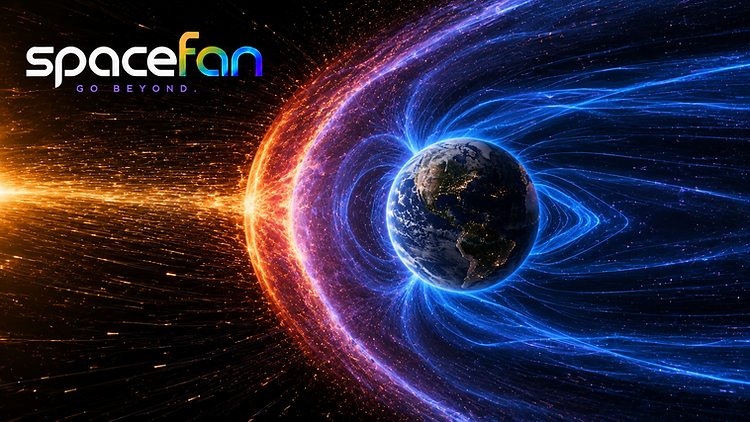
Scientists have found a new way to tell if a faraway planet has a protective magnetic field by watching how it reacts to stellar storms.
The Drop
Why It Matters
Aurora Tonight
Live NOAA outlookLow aurora activity
Mostly Arctic: Alaska, northern Canada, Greenland, and far-northern Europe
Aurora forecasts are probabilistic. Darkness, clouds, local light pollution, and rapidly changing solar-wind conditions affect what you can actually see.
The Catch
Put That in Perspective
Scientists have long used solar system planets like Earth and Venus to understand the rest of the galaxy. This research adds a new layer to that work by showing that the way a planet handles solar storms can serve as a fingerprint for its hidden internal structure. Future space telescopes may use this logic to study the magnetic health of planets orbiting other stars.
Keep Exploring Space


Hubble Telescopes Spots a Galaxy That Swirls the Wrong Way
A spiral galaxy in the Virgo Cluster is acting strangely by spinning its inner stars in a direction that goes against the rest of the galaxy.

Massive Galaxies Have Slowed Their Spin Over Billions of Years
Scientists discovered that big, ancient galaxies were once spinning faster than the ones we see around us today.

Gravity from Twin Stars Changes How We Measure Alien Planet Weights
A new study reveals that nearby sibling stars can trick our measurements, making some planets appear heavier or lighter than they really are.


Stellar Factories Found Making Rare Elements
Astronomers discovered that dying stars in nearby galaxies are churning out heavy metals through a unique cosmic process.