Advertisement
Space.Fan — Go Beyond
ApJ · 3 DAYS AGO
DiscoveriesPEER REVIEWED

Webb Telescope Peers Through Cosmic Dust to Find Hidden Young Stars

By Space.Fan Editorial Desk

Astronomers used a new technique to peek inside a messy star-forming region, uncovering dozens of hidden, low-mass baby stars.
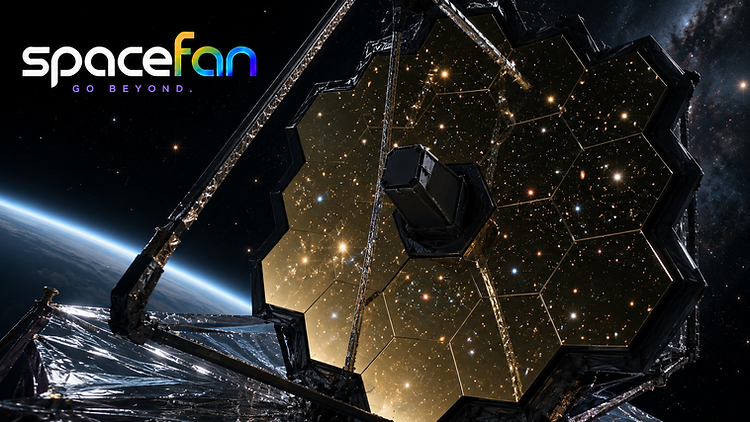
James Webb Space Telescope in space with its gold segmented mirror facing the stars.
Image · Space.Fan

The Drop

Space is filled with thick clouds of dust and gas where new s are born. These regions are very crowded and cloudy, which makes it hard for telescopes to see what is happening inside. Astronomers often struggle to tell the difference between a young and dust or background objects that are just passing by. To solve this, researchers used the powerful James Webb Space Telescope and its special NIRSpec camera. They looked at a -forming area called NGC 2024. By using a new method to analyze the light coming from this region, they could better separate the light of the s from the thick, glowing dust blocking their view. The team studied 78 different objects in the area. Their complex math model helped them figure out which objects were truly young s, which were just s in the background, and which were still a mystery. Most of the s they looked at were covered in layers of ice or had bits of dust spinning around them. After looking at the data, the team identified 46 confirmed candidate members of the nursery. They were also able to estimate how big these s are and how bright they shine. This work is a big step forward in helping us see through the messy environments where s are made.
Advertisement

Why It Matters

This discovery matters because it gives us a better way to map out how s grow in their earliest stages. Before this, dust and ice clouds were like a thick fog that made it nearly impossible to measure the size and mass of these baby s accurately. By creating a reliable framework to clean up this data, scientists can now study these busy -forming neighborhoods with much more detail. This helps experts understand the life cycles of low-mass s, which are the most common type of in our galaxy.
Advertisement

The Catch

While the team identified 46 candidates, some of the results are still uncertain. Because these s are so young and tucked away in such thick dust, the models used to guess their mass and age still have some wiggle room. Some s appeared brighter or larger than the models expected, which might be because of our limited understanding of these very young environments rather than the s themselves.

Put That in Perspective

This study sets a new standard for how we use Webb's data to look at crowded star regions. In the past, it was easy to get confused by dust, but this model provides a clear set of rules for future observations. Researchers plan to use this same technique to clear the fog in other star-forming regions across the galaxy.

Source November 19, 2026
ApJ

Keep Exploring Space