Advertisement
Space.Fan — Go Beyond
PASP · 5 DAYS AGO
DiscoveriesPEER REVIEWED

A New AI Tool Helps Scientists Quickly Identify Exploding Stars

By Space.Fan Editorial Desk

Researchers have built a smart computer program called SpectraNet that can spot and classify space events faster than ever before.
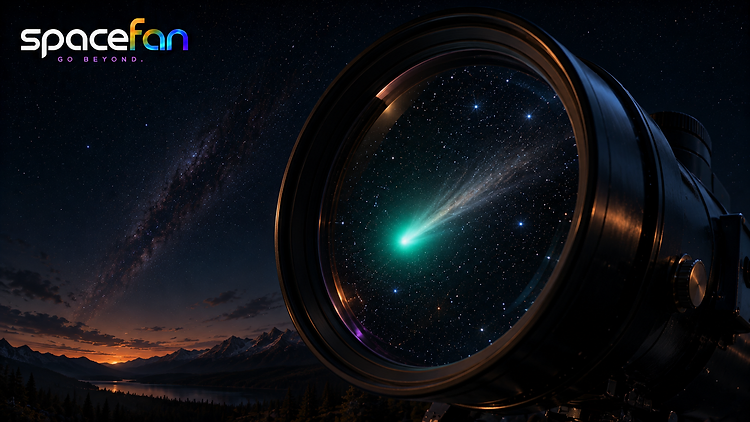
Large telescope lens reflecting a bright green comet beneath the Milky Way above a mountain landscape at dusk.
Image · Space.Fan

The Drop

The universe is full of sudden, short-lived events called transients. These include exploding s, known as e, and other bright bursts of light that appear in the night sky. Telescopes like the Zwicky Transient Facility scan the sky every night to find these flashes. While finding them is a great t, scientists need to know exactly what they are looking at to learn about the universe. To figure out what an object is, astronomers usually study its light using a process called spectroscopy. This breaks light apart into a spectrum, which acts like a fingerprint for the object. However, these fingerprints can be messy, blurry, or very faint, making them hard to read. In the past, scientists had to use complex mathematical models to guess what the data meant, which took a lot of time and effort. To solve this, researchers developed a deep learning tool called SpectraNet. This program works like a digital brain that has been trained to look at thousands of these light fingerprints. By using a type of technology called a convolutional neural network, SpectraNet can find patterns in the data that are too subtle for humans or older computer programs to notice easily. The team tested SpectraNet using real-world data from instruments like the Spectral Energy Distribution Machine. They found that their new program was much better at correctly naming the types of objects it saw compared to older methods. Because it can learn from its own mistakes and process information quickly, it could soon become the standard way to help astronomers identify strange new objects in the sky.
Advertisement

Why It Matters

This breakthrough matters because space is changing too fast for humans to keep up. Telescopes are now so powerful that they find massive amounts of information every single night. If scientists had to manually look at every single spectrum, they would be buried in work and miss many important discoveries. SpectraNet acts like a high-speed filter. It sorts through the noise and correctly identifies the most interesting events, allowing astronomers to focus their limited telescope time on the objects that are truly special. This speeds up our ability to map the life cycles of s and understand how galaxies change over time.
Advertisement

The Catch

While SpectraNet is very good at its job, it is not perfect. The program relies on being trained with existing data, meaning if it encounters a completely new type of space event that has never been seen before, it might struggle to label it correctly. Additionally, the tool works best with low-resolution data, and its performance might change when used with different types of instruments that record light in ways it was not trained to recognize.

Put That in Perspective

In the early days of astronomy, scientists drew what they saw through telescopes by hand. Later, they used photographic plates and basic computers. Today, we have entered the era of 'big data' where artificial intelligence is required to make sense of the billions of signals coming from the sky. Future research will likely focus on teaching these programs to work across even more types of telescopes simultaneously.

Source September 21, 2026
PASP

Keep Exploring Space