Advertisement
Space.Fan — Go Beyond
ApJ · 10 HR AGO
Sun & Space WeatherPEER REVIEWED

A New Way to Better Understand How Stars Spin

By Space.Fan Editorial Desk

Scientists have found a better way to use math to read the light from stars, making it easier to tell how fast they are spinning.
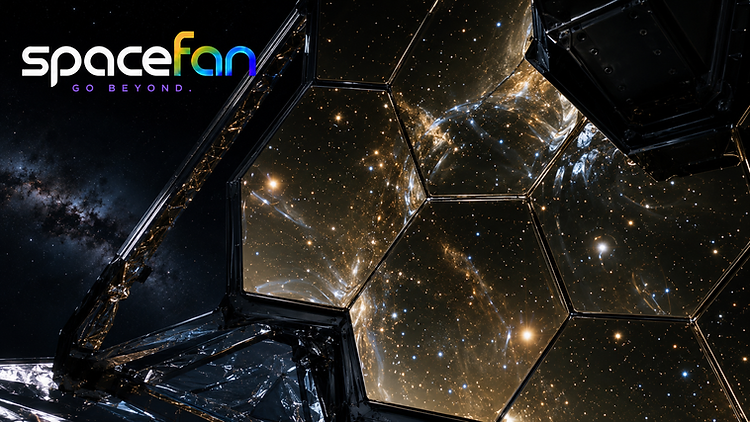
Close-up of the James Webb Space Telescope's gold hexagonal segmented primary mirror in space.
Image · Space.Fan

The Drop

Astronomers often look at the brightness of s to learn how they move. They use a tool called a Gaussian Process, which is a complex math model that helps spot patterns in data. These patterns show up when a has dark spots on its surface that rotate in and out of view. However, sometimes these math tools give the wrong answer, making it look like a is spinning at a speed that does not match reality. This happens because the model finds a pattern that is mathematically simple but physically impossible. To fix this, researchers created a new way to guide the math. By adding rules to the model, they forced it to stay focused on physically real possibilities rather than just taking the easiest path. They tested this method on 539 s using data from NASA's TESS telescope. This telescope spends months watching s to record tiny changes in their light. By using these new rules, the team improved the accuracy of their -spinning measurements by 7 percent. This shows that their new approach is much better at picking out real rotation patterns from confusing, noisy data.
Advertisement

Why It Matters

Knowing how fast a spins is very important for learning about its age and history. For younger s, the light patterns can be very messy because of large, changing spots. If scientists cannot correctly measure how fast a rotates, they might make mistakes about how the behaves or how it affects s nearby. This improvement helps researchers get more reliable data from space telescopes without needing a person to check every single result by hand.
Advertisement

The Catch

This new method is not perfect for every single . While it performs better than older models, it still relies on specific math rules that may not catch every possible error. The study looked at s in specific groups, so it is possible that s in other parts of the galaxy might behave differently in ways the model does not yet understand.

Put That in Perspective

Scientists have been trying to make sense of stellar light patterns for a long time. In the past, this work required a lot of manual effort to verify if the math was correct. By making this process more automatic and accurate, astronomers can now study thousands of stars at once, which is a huge step forward for large-scale space surveys.

Source October 3, 2026
ApJ

Keep Exploring Space