Advertisement
Space.Fan — Go Beyond
arXiv · 7 DAYS AGO
UniverseSIMULATION

A New Way to Find Ghostly Black Holes Hiding in Our Galaxy

By Space.Fan Editorial Desk

Scientists are preparing to use a powerful new space telescope to hunt for invisible black holes drifting through the Milky Way.
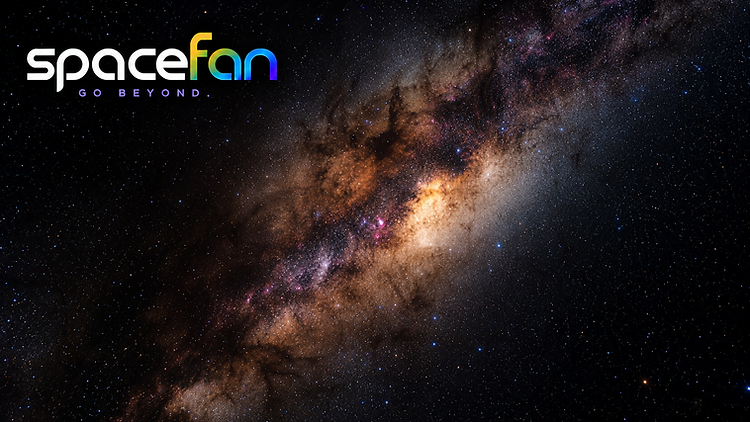
Dense star fields and glowing dust clouds across the center of the Milky Way galaxy.
Image · Space.Fan

The Drop

Our galaxy is home to millions of stellar-mass s, but most are impossible to see because they do not glow or give off light. Scientists believe these objects are out there, quietly moving through space alone. To find them, researchers are planning to use the Nancy Grace Roman Space Telescope. This telescope will look for a special effect called astrometric microlensing, which acts like a cosmic magnifying glass. When a passes in front of a distant , its intense gravity pulls on the light coming from that . This makes the appear to wiggle slightly in its position. Even if the itself is invisible, the way it makes the background jump around reveals that something heavy is hiding nearby. Researchers created detailed computer simulations to see if the telescope could spot these movements. They found that the telescope should be able to identify hundreds of these hidden objects over five years. This method works even when the is too far away to make the background get brighter, which is the traditional way these events are usually found. By carefully watching the s in the center of our galaxy, the telescope can track these subtle wobbles. This gives astronomers a brand new way to map out the invisible population of s drifting through the Milky Way.
Advertisement

Why It Matters

Finding these isolated s is like finding missing puzzle pieces. They are the leftovers from dead s that exploded long ago. By studying how many there are and where they are located, scientists can learn more about how s die and how s are created. Currently, we only know about the s that have a partner they are pulling material from. This study shows we can finally look for the loners, which make up the vast majority of all s in space.
Advertisement

The Catch

This research is based on computer models, not direct observations, so we have to wait for the real telescope data to confirm these numbers. Also, it can be very difficult to figure out the exact weight of a just by watching a wiggle, so we might not know the exact size of every we find.

Put That in Perspective

Scientists have been searching for ways to spot these invisible giants for years. While we have caught glimpses of them before, this new survey plan is designed to turn these rare discoveries into a systematic way of counting the black hole population throughout our galaxy.

Source November 16, 2026
Zofia Kaczmarek, Peter McGill
A&A·10.48550/arXiv.2611.17410

Keep Exploring Space