Advertisement
Space.Fan — Go Beyond
arXiv · 5 DAYS AGO
DiscoveriesEARLY RESEARCH

A New Way to See Inside Distant Alien Worlds

By Space.Fan Editorial Desk

Scientists have found a better way to map the atmospheres of faraway gas giant planets using data from the James Webb Space Telescope.
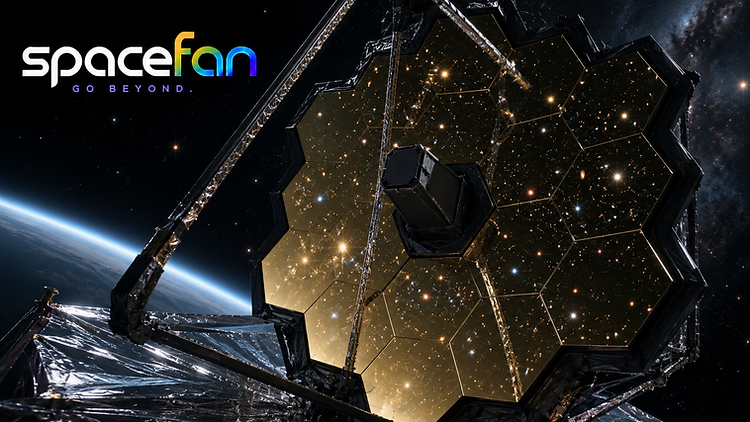
James Webb Space Telescope in space with its gold segmented mirror facing the stars.
Image · Space.Fan

The Drop

Researchers have developed a clever new computer model to study the atmosphere of a distant hot called WASP-94Ab. When we look at distant s, we often see their light as one big blur. This makes it hard to tell what the different sides of the look like, such as the morning side versus the evening side. Because the two sides can have very different temperatures and cloud patterns, looking at them as one big average can lead to wrong guesses about what the is actually made of. By using a new method called a two-temperature-profile model, scientists can now split that light apart to get a much more accurate picture of the 's chemistry. This model was run using a new, faster computer code that handles the complicated math much quicker than older tools. Using this, the team discovered that the is not as metal-rich as earlier, simpler models had suggested. This proves that even when we only have a blurry, averaged view of a , we can still tease out the tiny details of its atmosphere.
Advertisement

Why It Matters

This breakthrough is important because it changes how we measure the ingredients of s outside our solar system. For a long time, scientists used models that assumed a 's atmosphere was mostly the same all the way around. This new study shows that these older models were often wrong. By accounting for the differences between the morning and evening sides, researchers can get a more realistic count of the chemicals present on these worlds. This gives us a much clearer understanding of how these giant s formed and how they behave.
Advertisement

The Catch

While this new model is very powerful, it is still just a model. It relies on specific assumptions about how heat and clouds move across the . If those assumptions about the atmosphere are off, the results might still be slightly inaccurate. It does not replace the need to actually see the two sides of a separately, but it provides a very strong way to study them when we cannot look at them individually.

Put That in Perspective

In the past, studying the two sides of a distant world required very rare and difficult observations. This new method allows scientists to study the lopsided nature of many more planets without needing those perfect, rare conditions. Researchers will likely use this tool to re-examine data from other planets to see if their previous findings need to be updated.

Source September 21, 2026
Tyler R. Fairnington, Michael Radica, Michael Zhang, Eliza M.-R. Kempton, Jacob L. Bean, Eva-Maria Ahrer, Arjun B. Savel, Pascal S. D'Andrea
ApJL·10.48550/arXiv.2609.20923

Keep Exploring Space