Advertisement
Space.Fan — Go Beyond
ApJ · 4 DAYS AGO
Solar SystemMODEL

A New Way to See Mercury's Invisible Magnetic Field

By Space.Fan Editorial Desk

Scientists have found a clever way to map Mercury's magnetic field by tracking how light bounces off clouds of sodium atoms.
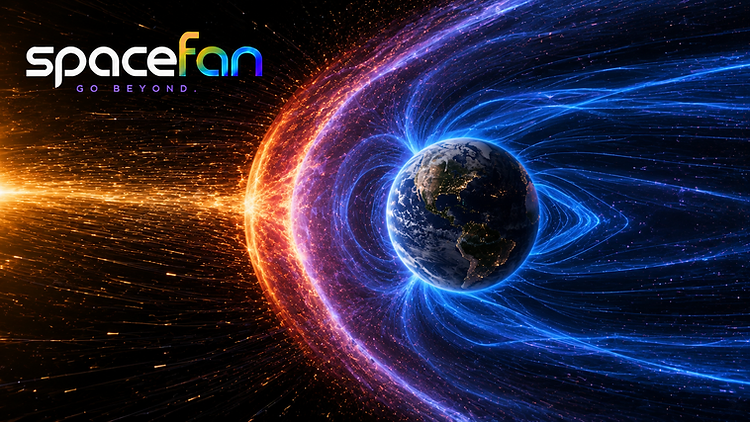
Earth surrounded by glowing magnetic field lines as solar particles strike the magnetosphere.

The Drop

Usually, we learn about space weather by flying a spacecraft right through it. This tells us what is happening in one spot, but it does not show us the big picture of magnetic structures around a . Because Mercury has a very weak magnetic field, it is hard to measure it using traditional methods. Scientists wanted a way to see the whole magnetic shape at once without needing a probe to fly through every part of it. The team looked at sodium gas surrounding Mercury. Sodium atoms interact with sunlight and the 's magnetic field in a special way that creates polarized light. By building a computer model, they simulated how this light would look if captured by a powerful telescope on Earth. This method acts like a special pair of sunglasses that reveals the hidden magnetic field lines by how they change the light coming from the sodium. The model shows that if we use a telescope with a mirror about 1.8 meters wide, we could take a clear picture of this magnetic activity. It would only take about 10 minutes of exposure to get a high-quality map. This could allow us to watch how the magnetic field changes over time from the comfort of Earth, rather than relying only on passing spacecraft.
Advertisement

Why It Matters

This discovery matters because it provides a remote-sensing tool to study ary environments that are otherwise very difficult to observe. By mapping the magnetic field structure of Mercury, scientists can better understand how the solar wind hits the and interacts with its surface. This helps us learn more about the formation and behavior of small rocky s in our solar system.
Advertisement

The Catch

This result is based on a computer simulation, not an actual observation from a real telescope. The researchers have proven the math works on paper, but it still needs to be tested in real-world conditions. Factors like atmospheric interference from Earth or bright glare from the Sun could make these images harder to capture than the model predicts.

Put That in Perspective

Past studies of Mercury relied on missions like MESSENGER that flew directly through the magnetosphere. This new method represents a shift toward using light-based signals to study distant magnetic fields, which could eventually be used to study other moons or planets with weak magnetic fields.

Source November 18, 2026
ApJ

Keep Exploring Space