Advertisement
Space.Fan — Go Beyond
AJ · 4 HR AGO
DiscoveriesPEER REVIEWED

A Space Mystery: Is it a Planet or a Twin Star?

By Space.Fan Editorial Desk

Astronomers are re-examining a distant light event that could be a massive planet or just a companion star.
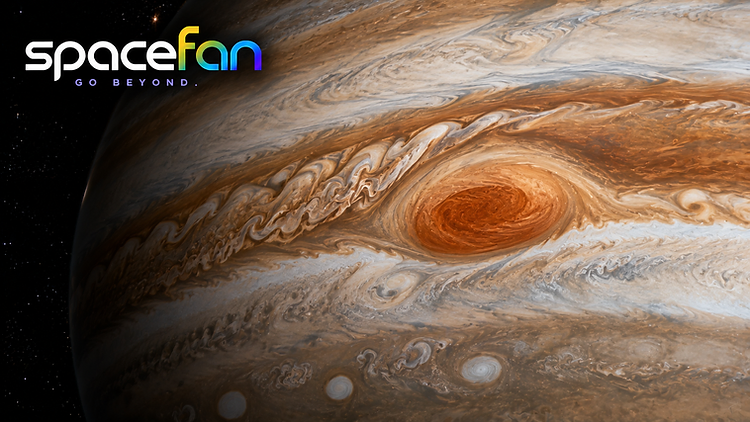
Jupiter's Great Red Spot storm visible from space.
Image · Space.Fan

The Drop

Space researchers often look for s by watching how gravity bends light from s far away. This process is called microlensing. Years ago, scientists spotted a special event labeled OGLE-2011-BLG-0950. At first, they thought it might be a orbiting a . Later, others looked at the data and thought it was actually two s circling each other instead. Now, a new team of scientists has taken a closer look at the same data. They found a new way to interpret the light patterns. By using updated math and comparing it with high-resolution images, they showed that the idea is back on the table. It is possible that a giant , about one and a half times the size of Jupiter, is orbiting a like our Sun. To figure this out, the team looked at the light curve, which is the brightness of the over time. They also checked how the moves compared to the background. Because both a model and a model can explain the light we see, it remains a tough mystery to solve for sure.
Advertisement

Why It Matters

This study shows how tricky it is to identify objects in space that are very far away. By proving that the ary model is still a possibility, researchers are reminded that they need to be very careful with their math. It helps them prepare for future missions, like the Roman Space Telescope, which will hunt for many more s using these same methods.
Advertisement

The Catch

The main problem is that we have two different answers that look the same in our data. This is called a degeneracy. Scientists cannot tell if they are looking at a giant or a second because both scenarios fit the observations equally well. Even with better tools, the distance and the way the light bends leave room for doubt.

Put That in Perspective

This event was originally studied years ago, and science has moved forward since then with better computer models. Researchers will likely use these new findings to refine how they analyze similar events, especially as they search for planets that are distant from their host stars.

Source October 4, 2026
Jiyuan Zhang, Weicheng Zang, Andrzej Udalski, Hongjing Yang, Shude Mao, Michał K. Szymański, Igor Soszyński, Radoslaw Poleski, Krzysztof Ulaczyk, Paweł Pietrukowicz
Tsinghua University, Westlake University, University of Warsaw, University of Warwick, NASA Goddard Space Flight Center, University of Maryland, Max-Planck-Institute for Astronomy·The Astronomical Journal·10.3847/1538-3881/aea291

Keep Exploring Space