Advertisement
Space.Fan — Go Beyond
ApJ · 4 DAYS AGO
UniversePEER REVIEWED

A Strange Dancing Star System Found in the M81 Galaxy

By Space.Fan Editorial Desk

Astronomers found a unique star system that shoots out regular, bright flashes of X-ray energy like a cosmic bonfire.
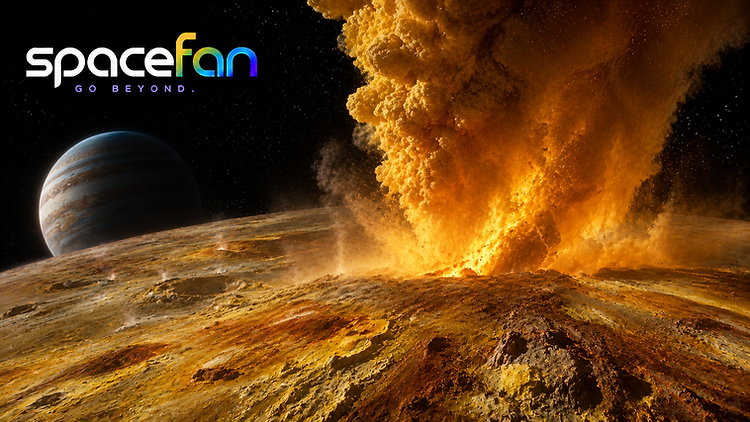
Huge volcanic eruption on the orange surface of Io with Jupiter visible in space behind it.
Image · Space.Fan

The Drop

Scientists have spotted a very unusual object in a nearby galaxy called M81. They named it M81F4. This object is a type of system where two s are dancing around each other. One of the s is a very dense, heavy object known as a . The other is a medium-sized partner that is losing material to the heavy one. As the material falls toward the , it gets incredibly hot and gives off intense X-ray light. Usually, these systems glow steadily, but M81F4 does something different. It creates bright flashes of light that happen over and over again, like a flickering fire. Researchers discovered this by looking at data collected by space telescopes over the last twenty years. By stacking the images of these flares, they found a pattern where the light quickly gets bright and then slowly fades away. These flashes happen about twice a day on average. This makes the system act differently than any other similar pair of s we have studied before.
Advertisement

Why It Matters

This discovery is important because it could reveal a hidden group of systems that astronomers did not know existed. Most systems like this either stay bright all the time or flare in very specific, well-known ways. M81F4 does not fit these old rules. By studying how this system traps and releases energy, scientists can learn more about how magnetism works in extreme space environments. It gives researchers a new way to see how gravity and magnetic fields interact when matter is being pulled into a dense at very high speeds.
Advertisement

The Catch

While scientists have a good guess about what is happening, it is not 100 percent certain. They believe the flashes are caused by instabilities where the disk of gas meets the magnetic field of the . However, because we are looking at this system from very far away, we cannot see the fine details. It is possible that some other process is causing these bursts, and more observations will be needed to prove that their theory about magnetic regulation is correct.

Put That in Perspective

Astronomers are excited because they have never seen this specific pattern of light in other galaxies before. It shows that there is still a lot to learn about how stars behave in the deep reaches of space. In the future, researchers will likely look for other systems that flicker in the same way to see if M81F4 is a one-of-a-kind object or just the first of many they will find.

Source November 18, 2026
Jiachang Zhang, Zhiyuan Li, Xiangdong Li, Tong Bao, Ziqian Hua, Shanshan Weng
Nanjing University, INAF-Osservatorio Astronomico di Brera, Universität Potsdam, Nanjing Normal University·The Astrophysical Journal·10.3847/1538-4357/aeb93f

Keep Exploring Space