Advertisement
Space.Fan — Go Beyond
ApJ · 23 MIN AGO
UniversePEER REVIEWED

Aluminum Molecules Found Dancing Around a Giant Star

By Space.Fan Editorial Desk

Scientists used a powerful telescope to watch how aluminum behaves in the dusty, chaotic winds of a massive dying star.
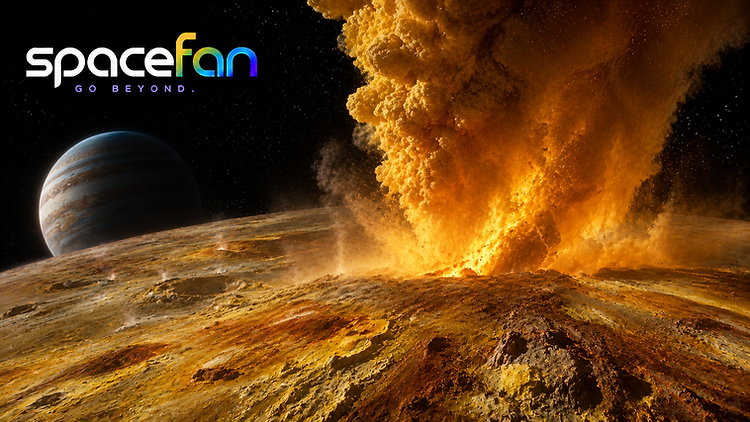
Huge volcanic eruption on the orange surface of Io with Jupiter visible in space behind it.
Image · Space.Fan

The Drop

A team of researchers took a close look at a massive, aging named VY Canis Majoris. This is a hypergiant, meaning it is incredibly large and nearing the end of its life. As it dies, it blows away its outer layers, creating a giant, dusty cloud around it. Using the ALMA telescope, which is a collection of sensitive antennas in Chile, scientists imaged four specific types of aluminum-based molecules in this cloud. To get the best data, they also combined their findings with measurements from another telescope in Arizona. The four molecules they found include aluminum monoxide and three other chemical combinations. These molecules were found grouped tightly around the , though one type called aluminum monoxide was also spotted in distant, energetic parts of the 's surrounding cloud. By looking at these molecules, scientists can see how the is recycling its material as it fades away. They found that standard chemical rules explain most of these molecules well, but aluminum monoxide seems to be acting differently than expected. This suggests that the is producing its own special, intense conditions that change how chemistry works in its environment.
Advertisement

Why It Matters

This study helps us understand how s create and recycle heavy elements like aluminum. By mapping where these molecules appear, scientists can learn how dying s help build the dust and gas that eventually form new s and s. It proves that the violent ejections of material from massive s act like a cosmic factory, breaking down older grains and creating new chemical combinations on the fly.
Advertisement

The Catch

While the team found strong evidence for these molecules, they still do not have a perfect model for why aluminum monoxide appears in the outer parts of the cloud. The current math only works if we assume the is triggering high-temperature shockwaves that break apart existing dust, but this is a theory that requires more study to confirm.

Put That in Perspective

Scientists have studied this famous star for years, but new technology like ALMA now lets us see the specific chemistry of its outer layers in high detail. Future studies will likely focus on mapping more complex molecules to see how they survive in the harsh winds of other aging hypergiants.

Source November 24, 2026
R. Ravi, L. M. Ziurys, A. M. S. Richards, R. M. Humphreys, L. Decin
University of Arizona, University of Manchester, University of Minnesota, KU Leuven·The Astrophysical Journal·10.3847/1538-4357/aeb803

Keep Exploring Space