Advertisement
Space.Fan — Go Beyond
ApJ · 5 DAYS AGO
UniversePEER REVIEWED

Early Galaxies Grew in Bursts of Star Formation

By Space.Fan Editorial Desk

New research shows that galaxies in the early universe grew through quick, powerful bursts of star creation rather than smooth, steady growth.
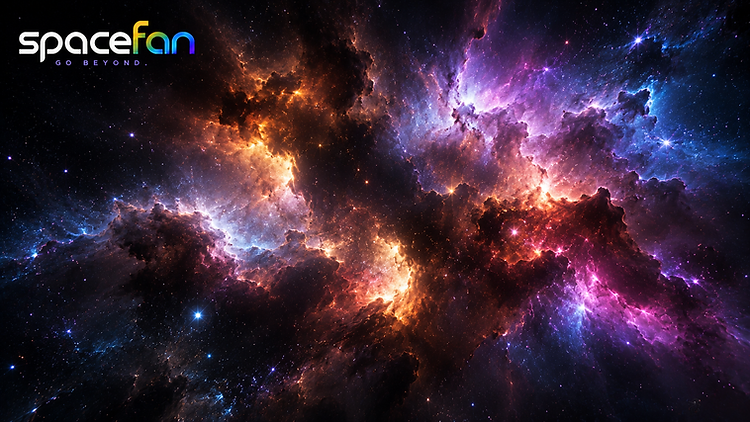
Colorful glowing nebula filled with stars and clouds of blue, purple, orange, and red gas.

The Drop

Astronomers have been studying how galaxies grew when the universe was very young. By looking at light from galaxies that existed billions of years ago, the team wanted to know if these galaxies made s at a constant speed or in fits and ts. This process of making s in rapid spurts is called bursty formation. Understanding this helps scientists explain why there are so many bright, glowing galaxies appearing in the early universe. To figure this out, researchers used data from the UNCOVER project. This project collects detailed light measurements from distant space. By looking at specific types of light signatures—like the colors given off by glowing gas clouds where s are born—the scientists could estimate how quickly s were appearing. They looked at galaxies from a time when the universe was only a small fraction of its current age. The findings show that galaxies throughout this early time period followed a similar pattern. They were constantly making s in these quick, intense bursts. This behavior was remarkably consistent as the universe aged from its very early stages to a more developed state. Because they looked directly at the light emitted by these galaxies, the team did not have to guess how the galaxies were built using computer models. This direct observation provides a clearer picture of the violent and energetic nature of the early universe. It confirms that the bright light we see from distant galaxies is likely the result of these rapid-fire -building periods.
Advertisement

Why It Matters

This discovery helps us understand the fundamental "recipe" for building a galaxy. If we know that formation is usually bursty, we can better predict how many bright galaxies should exist in the early universe. It clears up a mystery regarding whether we needed new, complex physics to explain the unexpectedly large number of bright galaxies spotted by our most powerful space telescopes.
Advertisement

The Catch

While the data is very clear for the galaxies studied, the researchers only looked at a specific group of objects. It is possible that different types of galaxies in other parts of the sky might behave differently. Additionally, the team focused on how galaxies look in their light signatures, which assumes we fully understand how those gases react to the intense radiation from young s.

Put That in Perspective

Scientists have long debated the life cycles of galaxies. Early theories often suggested smoother growth, but modern instruments are showing us a much more chaotic, energetic picture of the early cosmos. Researchers plan to use this information to better map out the history of how the first galaxies organized themselves into the structures we see today.

Source November 17, 2026
Ikki Mitsuhashi, Katherine A. Suess, Joel Leja, Rachel Bezanson, Jenny E. Greene, Emilie Burnham, Gourav Khullar, Abby Mintz, Themiya Nanayakkara, Karl Glazebrook, Sedona H. Price
University of Colorado Boulder, The Pennsylvania State University, University of Pittsburgh, Princeton University, Swinburne University of Technology, Space Telescope Science Institute·The Astrophysical Journal·10.3847/1538-4357/aeb266

Keep Exploring Space