Advertisement
Space.Fan — Go Beyond
PSJ · 9 HR AGO
Asteroids & CometsSIMULATION

Magnetic Forces Might Change How Rocks Move on Asteroid Psyche

By Space.Fan Editorial Desk

New simulations show that magnetism could cause dust and rocks on the metal-rich asteroid 16-Psyche to stick together in unexpected ways.
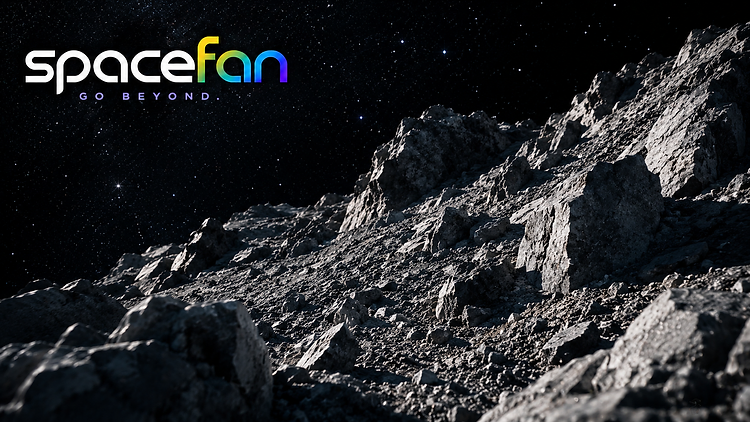
Rugged rocky asteroid surface covered with boulders beneath a star-filled sky.
Image · Space.Fan

The Drop

16-Psyche is a massive, metallic space rock that orbits our Sun. Because it contains so much metal, scientists have wondered if it could have its own magnetic field, either from a long-lost core or from the early days of our solar system. Researchers at the University of Maryland decided to test how this magnetism might change the way the surface of the acts. To do this, the team used a special computer program called a discrete element method. This tool allows scientists to simulate how thousands of tiny particles, or regolith, behave when they are pushed or fall over each other. It acts like a physics playground for space rocks. The team tested what happens when these rocks are magnetic. They found that in areas where the magnetic field is strong enough, the small bits of rock and dust don't just tumble like sand on a beach. Instead, they can stick together. This creates a behavior more like plastic than flowing sand, leading to steeper hills and rougher, bumpier surfaces than we would see on a normal, non-magnetic . This study suggests that if Psyche has even a small magnetic field, the surface might look quite different from what we typically expect from s. The team created a new math rule, called a magnetic Bond number, to help future space missions predict how these magnetic forces might shape the 's landscape.
Advertisement

Why It Matters

Understanding these magnetic effects is crucial for the success of NASA’s Psyche mission. When a spacecraft arrives to study an , it relies on images and data to map the surface. If scientists expect to see smooth, sandy slopes but instead see jagged, steep piles, it could lead to mistakes in measuring the 's features. This research helps the team build better expectations for what they will see when they get there.
Advertisement

The Catch

This study is based on computer models rather than direct observations from the surface. The results depend on assumptions about how much magnetism the actually has and what materials make up its dust. If the 's magnetic field is weaker than what the team used in their simulations, the magnetic effects on the surface might be too small to notice at all.

Put That in Perspective

Scientists are working to build a clearer picture of asteroid surfaces before the mission arrives. By studying how magnetism, gravity, and grain size work together, they are preparing to make sense of the strange, metallic landscape of 16-Psyche compared to the rockier asteroids we have visited in the past.

Source October 3, 2026
Anmol Sikka and Christine M. Hartzell
University of Maryland·The Planetary Science Journal·10.3847/PSJ/aea4b0

Keep Exploring Space