Advertisement
Space.Fan — Go Beyond
ApJ · 2 DAYS AGO
UniversePEER REVIEWED

Massive Galaxies Change Their Shape Over Billions of Years

By Space.Fan Editorial Desk

New research reveals that the centers of giant galaxies have slowly thickened over the last 6.5 billion years.
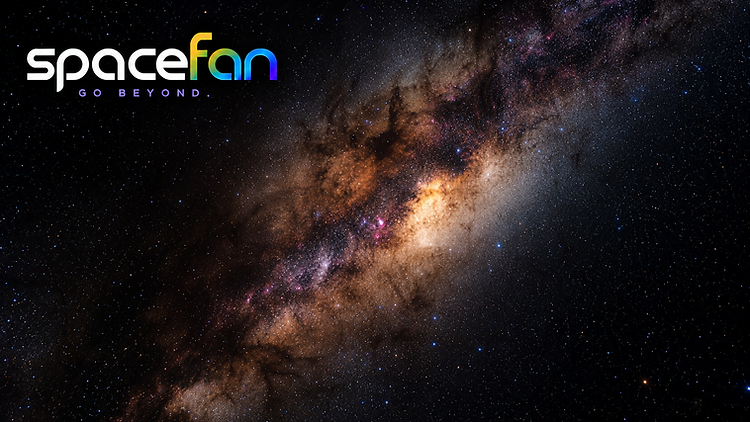
Dense star fields and glowing dust clouds across the center of the Milky Way galaxy.
Image · Space.Fan

The Drop

Astronomers have discovered that massive, elliptical galaxies have changed their internal structure over time. By looking back through space and time, researchers studied how s move within these giant galaxies. They found that these galaxies were structured differently billions of years ago compared to how they look today. This shows that galaxies are not static objects but continue to grow and change as they get older. To figure this out, the team used powerful tools to map out how fast s are spinning inside about 200 different galaxies. They combined data from the MUSE instrument, which acts like a camera for light and motion, with high-resolution images from the Hubble Space Telescope. By looking at how these s moved, they could weigh the galaxies and see how that weight was spread out from the center to the edges. They compared these distant galaxies to younger ones nearby to see the clear difference in their shapes. The study shows that the density of these galaxies has become steeper over the last 6.5 billion years. This means more mass has been gathering toward the center of the galaxies over time. This process is likely caused by the slow accumulation of gas and the collisions between smaller galaxies that happen over long periods.
Advertisement

Why It Matters

Understanding how these galaxies grow helps scientists fill in the blanks of cosmic history. This finding suggests that galaxies constantly reshape themselves through collisions and by pulling in nearby gas. It confirms that the way galaxies look is heavily influenced by these late-stage events rather than just how they ted out.
Advertisement

The Catch

While these results show a clear trend, they do not perfectly match current computer models used to predict how the universe works. This difference suggests that either the models are missing some details about how gas and s interact or that there is still more to learn about the history of galaxy growth.

Put That in Perspective

Scientists have been studying how galaxies evolve for decades, but this study is special because it uses a very consistent method to compare distant galaxies with those closer to home. Researchers will likely use this data to refine their computer simulations so that they can better match what we see in the real universe.

Source November 20, 2026
Pritom Mozumdar, Michele Cappellari, Christopher D. Fassnacht, Tommaso Treu
University of California, Los Angeles; University of Oxford; University of California, Davis·The Astrophysical Journal·10.3847/1538-4357/aeb0a6

Keep Exploring Space